Tag Archives: movies

The “Job” and the “Work”

deliver usOne of “New York City’s finest” has a second career as an exorcist.

Now there will be a movie, Deliver Us from Evil, from Sony Pictures. The movie, in turn, is based on his book.

If he is right, it could threaten the foundations of the corrections industry.

1971: Witches in Bellbottoms, Talking Heads

Here is a 1971 documentary from the BBC that is supposed to be about witches. But at the time it was made, no one was making much effort to sort out the new Pagan Witches, anthropological and folkloric witches, and Satanic witches of the Church of Satan variety. So what you get is all of them! Plus talking heads — academics, clergy, exorcists . . .

Like so many of the paperback “I go among the witches” books of the time, the filmmakers interview a few of the most public Pagans, such as Doreen Valiente (who should get equal billing with Gerald Gardner in creating Wicca), Alex and Maxine Sanders, and others. But they quickly run out of interview subjects — there were not too many in Britain back then — so they start skipping around: a famous murder case with a possible (folk) witchcraft connection, desecration of graveyards, the evil grip of Satanism, and so forth, to fill up their 49 minutes.

I write about this period in Chapter 4 of Her Hidden Children: “The Playboy and the Witch: Wicca and Popular Culture.” Looking at a number of paperback books on the American scene, I created a rough spreadsheet of places visited and people interviewed. It was interesting how much overlap there was. There seemed to be a “witchcraft trail” that the writers followed — you could imagine it starting at the Warlock Shop/Magical Child store in New York City and ending at Church of Satan founder Anton LaVey’s house in San Francisco.

What is missing at this moment from the outsiders’ view is an overall sense of the new Paganism, at least until Hans Holzer’s 1972 book, The New Pagans. Even the participants themselves were just coming to the view that Wiccans, for instance, might share a Pagan outlook with Druids — the new Druids, that is. We often forget how deliberately isolated those covens were (“We can’t circle with Coven XYZ because it would mean sharing our secrets!” Really, I heard stuff like that in the 1970s.)

Serious academic study of the new Paganism(s) would not really get rolling until the 1980s. For instance, during the 1970s Robert Ellwood, Jr. at the University of Southern California was writing Alternative Altars: Unconventional and Eastern Spirituality in America (1979), which would offer some theoretical models applicable to the new Paganism, but he did not incorporate it into his discussion in that book.

Welcome, visitors from The Wild Hunt. Look around a bit.

(Thanks to Renna in Denver for the link.)

Esotericism and the ‘Walking Wounded’

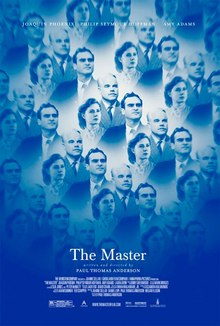
Last night I watched The Master, with Philip Seymour Hoffman, Amy Adams, and Joaquin Phoenix, respectively playing an L. Ron Hubbard-type esoteric group’s leader (making stuff up as he goes), his wife and collaborator,  and an erratic alcoholic sailor who becomes, for a time, his follower.

I rented it mainly because I have long been a big fan of Hoffman as an actor who disappears into roles (especially Capote), rather than just playing variations on himself. And The Master is more about character than plot — the plot itself could be summarized in one sentence.

Walking the dogs this morning, I started fantasizing that if there were a School of Esoteric Management, this movie could be shown in class, followed by lengthy discussion, because what esoteric group does not have its “Freddy Quells” (Phoenix’s character)?

Eighty years ago, the occultist Dion Fortune made dismissive references to “lecture room tramps,” the people who came to lectures and presentations by this teacher or that, but who never really committed to any system.

Freddie is not looking for teaching necessarily — he literally stumbles into “The Cause,” and “Lancaster Dodd” (Hoffman) decides to demonstrate his method of quick psychological breakthrough and cure on him. For a time, Freddie becomes a loyal follower, even a kind of enforcer. But in the end, he is too damaged for “The Cause.”

Esoteric groups always attract the psychological “walking wounded” who are looking for a quick fix and excitement. Even Jesus of Nazareth had Judas the Sicarius, who seemed OK for a while but was really the kind of unstable fanatic who today would strap on a suicide vest.

Sky Full of Saucers

I watched Iron Sky last night — and then this:

Must be a meme here somewhere.

You can crowd-fund the sequel to Iron Sky.  This is all part of my appreciation of homegrown Finnish films — they are rare exports.

Talking like the Old Ones

Back in 2000, I was writing an article about a prescribed fire on the national forest near my home, so I hiked in with the ignition crew. Some point during the day, I heard a radio crackle with the message, “Come up that little ridge and bring fire with you.”

Bring fire with you. I thought of one of my favorite movies, Quest for Fire, and the language of its Neanderthal characters. And I thought of how that sentence could probably be translated into Neanderthal — if only we knew how — and certainly into a later Proto-Indo-European.

Those might be “utraconserved words,” as defined by this piece from the Washington Post.

You, hear me! Give this fire to that old man. Pull the black worm off the bark and give it to the mother. And no spitting in the ashes!

It’s an odd little speech. But if you went back 15,000 years and spoke these words to hunter-gatherers in Asia in any one of hundreds of modern languages, there is a chance they would understand at least some of what you were saying.

That’s because all of the nouns, verbs, adjectives and adverbs in the four sentences are words that have descended largely unchanged from a language that died out as the glaciers retreated at the end of the last Ice Age. Those few words mean the same thing, and sound almost the same, as they did then.

Read the rest and listen to the words themselves.

UPDATE: Another piece, this one from Wired, on the same research:

Pagel and his co-workers took a first step by building a statistical model based on Indo-European cognates. Incorporating only the frequency of a word’s use and its part of speech (noun, verb, numeral, etc.)—and ignoring its sound— the model could predict how long the word persisted through time. Reporting in Nature in 2007, they found that most words have about a 50% chance of being replaced by a completely different word every 2000 to 4000 years. Thus the Proto-Indo-European wata, winding its way through wasser in German, water in English, and voda in Russian, became eau in French. But some words, including I, you, here, how, not, and two, are replaced only once every 10,000 or even 20,000 years.

Robin of Kent (and His Merry Men)

A British historian argues that Robin Hood was based on a guerrilla bowman nicknamed Willikin of the Weald, although he might have passed through Sherwood Forest. (A snippet of the longer article from History Today)

That puts him fighting for “bad King John” (a minus) but against the French (always a plus for an English folk hero).

Whoever he was, check out his filmography. Where that leaves Herne the Hunter, I don’t know.

Ghost Girls: Witchcrap or Pop Occulture Fun?

My old friend Oberon Zell of the Church of All Worlds is backing this show because he designed some jewelry for the characters.

A Facebook commenter calls the show “the kind of CRAP our spiritual community has had to put up with for decades!”

According to the projected TV series’ website,

Janet, Crystle, and Tawnya are three attractive girls that share a close-knit sisterhood with a decidedly macabre twist. The girls were drawn together by their penchant for the unusual, supernatural – all having supernatural abilities themselves, which set them apart from the rest of the ordinary world. The “Ghost Girls” enclave is based at a haunted old Victorian house in Southern California.

And the editor in me is screaming, “How do you base an enclave?” The “girls” themselves might be based in a haunted et cetera.  Hello, dictionary please. But with all the hours of cable programming to fill, someone will probably pick it up.

Consider it another link in the evolution of the “Hollywood Witch.”


The Hidden Folk of Iceland

“Two nations live in this country — the Icelandic nation and this invisible nation.”

Huldufólk 102 is a wonderful 2006 documentary about Icelanders’ relationship with the Hidden Folk (elves, fairies) in their landscape. You can watch it online here (74 min.) Here is the trailer.

One of my favorite parts starts eight minutes in, when a primary school teacher is explaining to the kids how the elves live in a boulder.

Only one of the numerous people interviewed is obviously New Age-y, with her talk about earth chakras, etc. And there is one guy in sort-of medieval Norse garb, his cap decorated with runes, who is described in the subtitle as a “sorcerer.” (Some people are speaking English, some Icelandic with subtitles.) The rest are pretty much down-to-earth Icelanders, a couple of whom describe their own outlooks as Pagan and/or Heathen.

You have heard stories about roads being routed around “inhabited” spots? Here is a civil engineer who did it.

Also  the land itself: mountains, geysers, rocky coasts, cliffs — wonderful as well.

UPDATE: Bad link to complete film now fixed.

(Hat tip to Galina Krasskova.)

End of Year Lists: Books, Movies

Religion Dispatches lists five important new books on alternative and metaphysical spirituality in America — I prefer that to saying they are about the “nones,” which is a vague term — yes, well, so is “alternative.”

Catherine Albanese of UC-Santa Barbara has done important work in identifying first the non-theistic “nature religion” current  in American thought and secondly the importance of the metaphysical current in the book mentioned here: A Republic of Mind and Spirit.

And one of the Pagan studies crowd, Lee Gilmore, gets a mention for her book on Burning Man. You can also read a longer interview with her at the site.

A burst of blogging at The Juggler produces lists of the worst Pagan movies of 2012, plus the best Pagan movies, environmental Pagan movies, and more — look around.

Not a year’s end “Best Of” list, but still a round-up of scientific thinking about alien life and and fictional treatments of alien invasions at Instapundit.

And may your 2013 be a “Best Of” as well.

A Goddess-Movement Video with Something Extra

One of Fred Adams’ visionary paintings on the DVD case for “Dancing with Gaia.”

First, although this is not directly about “the Goddess movement,” I want to point out the blogging that Aidan Kelly has been doing, particularly about the history of contemporary Paganism in America, at his Patheos blog, Including Paganism.

Another resource is Dancing with Gaia, a video subtitled “Earth Energy, Sacred Sexuality, the Return of the Goddess as Gaia . . . a Continuum,” produced and directed by Jo Carson (82 min.)

A number of the well-known names from the Goddess movement are in, such as the Swedish artist and anarchist Monica Sjöö (1938–2005) to name just one. So it is a valuable work.

What I found particularly interesting, however, was the large amount of 1970s- era footage of the Southern California Pagan group Feraferia, founded by the Goddess- visionary artist Fred Adams and his wife, Svetlana.

Somehow the Adamses are left out of most surveys of Goddess religion. Perhaps they were too visionary, too “cosmic”  . . . and too religious? They just did not fit the narrative—except in Carson’s case.

But what you can see is home-movie footage of Pagan ritual in the California mountains that must be some of the earliest available, as well as other footage of sites in Europe, the Mediterranean, and elsewhere.

Dancing with Gaia is available on DVD for $19.95.