If you can watch this documentary without laughing, I wonder why you are reading this blog.
And yet . . . and yet . . . it raises wonderful questions about the categories of “spiritual teacher” and “spirituality.”

If you can watch this documentary without laughing, I wonder why you are reading this blog.
And yet . . . and yet . . . it raises wonderful questions about the categories of “spiritual teacher” and “spirituality.”
¶ The 6th Israeli Conference for the Study of Contemporary Religion and Spirituality (PDF) includes some Pagan-friendly themes.
¶ The Association for the Study of Esotericism will meet in June at Colgate University in upstate New York. Egil Asprem has more to say about that one.
¶ The Conference on Current Pagan Studies, held in Claremont, Calif., will be held on Feb. 8–9, 2014. More information will be forthcoming.
I shared a cabin with Margot Adler and some other presenters at the Florida Pagan Gathering four years ago. At that point she had read about seventy vampire novels and was still going strong, looking for the answer to the question, “Why do literary vampires fascinate us?”
Now she thinks she knows:
Every age embraces the vampires it needs, writes feminist author Nina Auerbach in her book, Our Vampires, Ourselves. Every age uses vampires to express their fears and concerns, writes Eric Nuzum, in his book, The Dead Travel Fast.
In 1897 when Bram Stoker wrote Dracula, England had the largest ports in the world. There was fear of incoming disease, of foreigners, of immigration. And Stoker created the perfect monster, Eastern European, bringing dirt from a foreign land. You can do this for every period that has had a wave of interest in vampires. In the 80’s, with Aids, vampires were often described in novels as parasites. You became infected by vampirism, like a disease.
Here is the whole text and video of her recent presentation. Read it, and the title of this post will make sense.
Last night I watched The Master, with Philip Seymour Hoffman, Amy Adams, and Joaquin Phoenix, respectively playing an L. Ron Hubbard-type esoteric group’s leader (making stuff up as he goes), his wife and collaborator, and an erratic alcoholic sailor who becomes, for a time, his follower.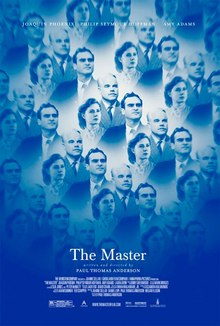
I rented it mainly because I have long been a big fan of Hoffman as an actor who disappears into roles (especially Capote), rather than just playing variations on himself. And The Master is more about character than plot — the plot itself could be summarized in one sentence.
Walking the dogs this morning, I started fantasizing that if there were a School of Esoteric Management, this movie could be shown in class, followed by lengthy discussion, because what esoteric group does not have its “Freddy Quells” (Phoenix’s character)?
Eighty years ago, the occultist Dion Fortune made dismissive references to “lecture room tramps,” the people who came to lectures and presentations by this teacher or that, but who never really committed to any system.
Freddie is not looking for teaching necessarily — he literally stumbles into “The Cause,” and “Lancaster Dodd” (Hoffman) decides to demonstrate his method of quick psychological breakthrough and cure on him. For a time, Freddie becomes a loyal follower, even a kind of enforcer. But in the end, he is too damaged for “The Cause.”
Esoteric groups always attract the psychological “walking wounded” who are looking for a quick fix and excitement. Even Jesus of Nazareth had Judas the Sicarius, who seemed OK for a while but was really the kind of unstable fanatic who today would strap on a suicide vest.
Heather Awen has the summaries and links.
The Human Dating & Mating issue of the ABC gave me concerns from the beginning. I chose the topic because I do not know right relationship is with those with whom we have sex and romance. Animism is all about right relationship. Although I expected most writers to be as lost as I, I also hoped in their blog posts would be some inklings on which to muse. At the very least, I’d feel less alone.
 ¶ After reading this article, I think I will write something for Fate magazine about how Tenochtitlan was really a Mexica overlay on a forgotten Roman colony. Should be good for a few chuckles.
¶ After a long hiatus (in comic book years), Asterix the Gaul returns.
¶ An old acquaintance, Loretta Orion, pops-up in this Samhain-themed article, “Phantoms of the Hamptons.” She is the author of Never Again the Burning Times: Paganism Revived (1994).
This would have been the perfect writing prompt for a Day of the Dead post: a big family memorial service for my uncle Jim, my mother’s younger brother, once well-known in the Denver legal scene.
But I am not writing that post, full of ancestral stuff.
He died in September, in Sun City, Arizona, where he lived after retirement, but the memorial was delayed until today, for reasons that I am not privy to.
His brother, Robert, told me that his ashes would be interred in a columbarium at the Episcopal cathedral in Denver. Columbarium is Latin for pigeonhole or dovecote, basically. Depending on the design, your “cremains” go into something like a post office box.
Robert had said that Jim’s would be placed with those of his mother and sister. These compartments are built under a broad sidewalk. As a high school senior, visiting the cathedral during some sort of humanities class trip devoted to ecclesiastical architecture, my girlfriend and I danced up and down that sidewalk, because I wanted to say that I had danced on my mother’s grave — in advance.
My mother and I were not too close.
When she died, I did the medical power-of-attorney thing, making last decisions at the hospital, and then handled her estate, but that was out of filial duty — and neither of my sisters wanted the job. They had their own issues with our mother.
Although I take after my mother’s family physically, I am not too close to them either — even though I have about twenty cousins on that side. For some reason, Uncle Robert never emailed the final details about the service and reception, and it says something that I did not know whom to call. Nor was I about to drive 150 miles to Denver and then hang around the cathedral, waiting.
Besides, had I gone, I would have missed the neighbors’ Bonfire Night party. (She’s British, in case you’re wondering.) As I started writing this post, with the front door standing open for the afternoon warmth, I heard a chainsaw whining in the distance — probably Bernie cutting more wood for a big fire. It’s a tradition on our road, and I wonder who the “Guy” tossed into the fire will be this year.
Last year’s party came a week after the forest fire, and the party-goers were split between the people who still had their homes and those who did not but came anyway.
This year, anyway, the village is more important than distant kin.
I have mentioned the elves of Iceland before, including a documentary film, but I wish also to draw attention to this article in The Atlantic, which views the interest in elves as largely a post-1970s revival.
Icelandic music phenom Bjork once cautioned the New Yorker: “You have to watch out for the Nordic cliche,” she said. “A friend of mine says that when record-company executives come to Iceland, they ask the bands if they believe in elves, and whoever says yes gets signed up.”
 Once in a while, I like to note that Hardscrabble Creek is a real place. The beaver pair had kits this year, and they also expanded their dams from two to five. A couple of years ago, they left because they had eaten all the available deciduous forage, mostly narrowleaf cottonwood and willows. Will the rising water table encourage more beaver-edible trees to grow? (They don’t eat pines.) Can they keep expanding their string of dams upstream?
And here are some links:
¶ At Occult Chicago, Rik traces sites associated with Thee Church of Satan in the 1970s.
¶ Artforum notes the recent Occult Humanities Conference: Contemporary Art and Scholarship on the Esoteric Traditions.
¶ Anton Lavey’s daughter Zeena describes how her Halloween experience when she was a little girl living with her father, the founder of the Church of Satan.
For the first quarter century of my life, back when I was the devil’s defender, Halloween wasn’t the fun and merriment it was for many others.
¶ Oh no! I bought the Halloween candy, but I forgot to pray over it!

Owlivia makes her getaway.
I have two volunteer gigs, and they both involve unexpected telephone calls.
For the rural volunteer fire department, it will be a recorded voice saying something like, “We have a smoke report east of Highway 165 and north of Highway 78.”
That is followed by a sudden switch into Nomex clothing, either the yellow shirt/green trousers wildland-firefighting outfit or the slightly heavier all-yellow “interface gear,” a fine product of California’s prison industries. Then comes urgent radio chatter as I try to figure out who is able to respond and if someone can pick me up with the engine on the way or the fire, or if I have to drive down to the station — or if I should just slap the magnetic flashing light on the Jeep and head for the incident directly.
The other unexpected type of call might be from the director of the raptor center down in Pueblo saying, “Someone in [some town] has an injured hawk in their back yard. Can you go pick it up?”
Or perhaps it is it’s the area wildlife-volunteer coordinator: “A rancher in [the valley] found some abandoned fox kits in a hay stack. They’re at a veterinarian’s office up there. Can you go get them and take them to the rehabilitation center?”
And M. and I get gloves, pet carrier, capture net, goggles, flea powder — whatever we need — load the truck and go. Maybe I pin on my official Colorado Parks & Wildlife name tag (she never bothers), so I don’t appear to be some random animal-snatcher.
Last Monday, the 21st, was the second kind of call. This time, an injured sharp-shinned hawk was in a garage—the homeowner had found it outside, unable to fly, and shooed it into the building for its own safety.
I was able to catch it pretty quickly — always good when there are people watching, and there usually are people watching, because they made the original phone call, and they want to see what happens next. And I gave the usual reassuring speech that it would be at the raptor center that evening and evaluated by a veterinarian the next day.
I knew its prospects did not look good. A day later, we learned what had happened: broken humerus, dislocated elbow, possibly the result of being hit by a car. Result: euthanasia. The expert opinion was that this bird would never be healed well enough to live on its own. More than not, that is what happens.
But there was better news. A great horned owl chick that had been found in a certain hardware store in our county last spring had spent all summer learning to fly and hunt at the raptor center, and now it was ready to be released. Could we pick it up and take it back to the same general area?
Such calls — all too rare — are the pay-off for the rest. We picked up the owl in her carrier, and before many miles, M. had named her “Owlivia.”
“Willow Creek Road,” I suggested, thinking of a small canyon in the national forest where I had heard great horned owls before, one that offers a mix of habitats: deep forest, brush, and pasture. After supper, as night was falling, we drove up there and let her go. She did not hesitate.
M. and I have special feelings about owls. For several years, they helped put food on the table for us, when we spent many spring and summer nights hiking in the dark, counting them for the Bureau of Land Management. If you’re fond of owls too, the Cornell Ornithology Lab has a package of owl sound clips that you can download for free — at least through H-owl-owe’en.