Three Items about the Dead

Whose Bones Are Those?

The Halloween news rush brought item about a new unit established at an Oxford college to perform cross-disciplinary investigations of religious relics

In what is thought to be the first research body of its type in the world, the unit, based in Keble College, will bring together experts in radiocarbon dating, genetics, osteology —the study of bones — chemistry, geography and archaeology with leading authorities in ancient Greek and Hebrew, Byzantine studies, ecclesiastical history and theology.

I am not sure what tone to take with this — not my saints after all — and it really does not matter to me if the skull of St. Cuthbert or whatever turns out to be someone else. One on level, this is interesting archaeology. On another, it feels like a re-run of the 16th century — the “stripping of the altars” and all that — but with “functional” science (instead of Protestantism) taking on “superstitious” religion (instead of Catholicism).

So why now? Is there a culture war motive, with “leading authorities in . . . . theology” participating in the disenchantment of the world? On the other hand, they hint that they may have found John the Baptist.

Four Scary Places

Still thinking about the dead? So are the editors at Indian Country Today, which ran this piece titled ” Get Spooked! 4 Scary Places to Visit This – or Any – Halloween,” on Friday last.

Halloween is the holiday when we face fear and get right in the face of the supernatural. Children wear costumes and adults seek out opportunities to confront the unknown or, some would say, the misunderstood. In that spirit, we offer four places you can go to laugh at your deepest anxieties. Or scream.

But why would you scream? Read it and find out.
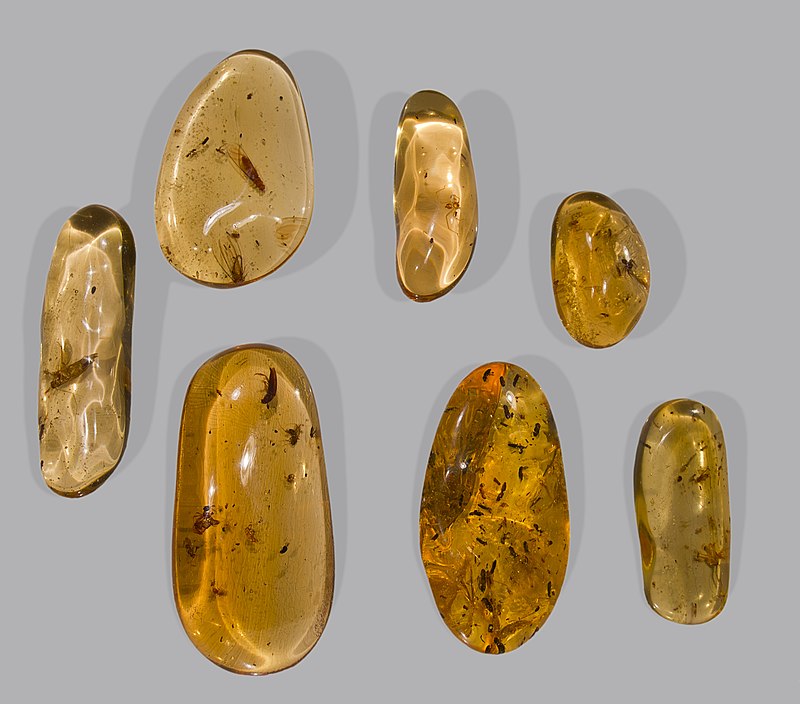
Beads of copal (Wikimedia Commons).

Paganism at the Public Library

If I had time to drive over to Pueblo, Colo., today, I could view the winners of the public library’s Día de los muertos altar contest. Unfortunately, they were supposed to be set up at 1 p.m., so set-up is in progress as I write, with winners announced at 3:30 p.m.—and everything dismantled by 4:30.

The entry form states,”Altars judged on overall appearance, originality, and creativity reference [sic] to traditions of Día de los Muertos.” Battery-operated candles only, please.

The instruction sheet goes on to tell you that you may commemorate “ancestors past, celebritys [sic] or beloved pets.” So maybe Vlad the Impaler could count as a celebrity, as he did at the university on the mesa in 2007?

As I wrote in 2011, I am sensing some tension between people who want the altars to be done only in some correct Mexican-ish manner, and those wanting to take the tradition in new directions.

The instructions are quite specific as to how you are supposed to represent Earth, Wind, Water, and Fire, and of course copal incense (not burning, though) is recommended. (I like copal too.)

So I regret that I cannot see these altars, but I appreciate that the library is teaching an effectively Pagan tradition. My gardening priestess, however, wants me to haul a big round of bale of spoiled hay from a neighbor’s ranch for winter mulch this afternoon, however. That’s another Samhain ritual.

The War on Halloween

Sergei_Aksyonov_3486318b

Sergei Aksyonov Photo: REUTERS/David Mdzinarishvili

It’s that time of year, time for the Russians to take their turn at complaining that Halloween is an evil Western import.

Segei Aksyonov, who has been placed in charge of the Crimean peninsula, which Russia recently snatched from Ukraine, called the holiday “cultural colonisation.”

Meanwhile, a spokes-priest for the Russian Orthodox Church suggests that celebrating Halloween leads to terrorism:

He also regrets that “when our country struggles against global terrorism, some of our citizens, may be jokingly, disguise in evil forces, making their children use to play with evil.”

Obviously, the Russian church is still catching up on clerical education following the end of the USSR. The root meaning of “cosmetic” is not “beauty” but “order,” with a secondary meaning of “ornamentation.” Look it up.

But if you want “cultural colonization,” (and I revert to the American spelling,)  just look here:
russians at McDsI took this photo last month on the Greek island of Corfu. The Russian guided-missile destroyer Smetlivy was in port, and sailors wandered the old town district on shore leave.

And did they end up in the hundreds of perfectly acceptable Greek bars and restaurants? No, they were always at McDonalds.

Look, spend your rubles on a good Corfu sofrito and some Corfu “real ale” and have fun on Halloween, OK?

If, that is, it is possible to feel festive while cruising up and down the Syrian coast.

It’s Late October — Who Can Keep Up with the News?

psst it's halloweenThere is more Pagan-related stuff popping up in the news and publishing world than usual right now. I wonder why. So here are some highlights:

• Gwendolyn Reece is a university librarian, blogger (Diary of an Occult Librarian), and scholar — one recent publication, “Impediments to Practice in Contemporary Paganism,” appeared in the most recent issue of The Pomegranate. So it made sense for the communications and marketing office at her employer, American University in Washington, DC, to go to her as their in-house expert on all things Halloween-ish.

• The phrase “post-Christian Europe” has become a journalistic cliché. So a writer for The Week imagines what a post-Christian and pagan [sic] world might look like.

So, could we go back to paganism? This is more than an idle question. Our era is still — much more than we care to admit — very much defined by Christian ideals, which — much more than we care to admit — were very much defined in opposition to pagan ideals. Looking at the pagan worldviews that once ruled Europe should give us some insight into the West today, and, perhaps, its future.

The article is free from much knowledge of actual contemporary Paganism outside of Iceland. But he does make the point that sacrifice was key to ancient Paganism, even though nowadays it is euphemized or just plain considered icky

• There is a type of book that I call “I go among the Witches.” Mostly I associate these with the 1970s, such as Susan Roberts’ Witches U.S.A. (1971), Hans Holzer’s The New Pagans (1973 but now on Kindle!), and the queen of them all, Margot Adler’s Drawing Down the Moon (original publication 1979).

A new entry in this genre is Alex Mar’s Witches of America. In a review titled “Eat, Prey, Learn Magic,” Rhyd Wildermuth gives it two thumbs down.

Much touted by the internet press–but met with muted reservation by most witches, her book offers a sordidly pornographic and self-aggrandising narrative disguised as an elucidating look into the way witchcraft is practised in the United States.  Belonging alongside a 1980’s issue of National Geographic (we’ll get to the pendulous breasts in a bit), exploitative British-tourist narratives, and freak-documentary, Mar’s book tells the tale of her search for authentic witchcraft in the most ‘extreme’ of American Pagan experiences.

• Want to sample Alex Mar’s book for yourself? Check this excerpt in New York magazine: “The Powerful, Unlikely Appeal of Witchcraft — Even for a Skeptic.”

That’s what this is like, the embarrassing wide-openness that witchcraft requires: a movement or voice or improv class, in which the actor is expected, required by her work, to throw herself all the way in. To make a flailing mess of herself as the only route to truer performance.

‘Cause her readers  understand the thea-tuh. Or as others say, “Fake it ’till you make it.” Nothing about deity in this excerpt, however.

An Icon from an Alternate Universe

sasha & julian 2-sm

Sasha and the emperor, at Icon Gallery.

We arrived in Corfu late in the evening of the 12th of September and had about fifteen minutes of worry when the agent of the apartment’s owner was not present to meet us at the airport, as promised. And I had neglected to get his number!

But I did have the number for Yannis, the owner, who lives in Athens, and I called him. He promised to call Nikos, the agent. Soon he called back to say that Nikos had car problems but would soon be in touch, which he was. Before too long Nikos arrived — on a Vespa — got us a taxi, and we were off.

He showed us the apartment, gave us the keys, and said that he would be back inthe late morning to collect the rent (assuming we liked the place — which we did) and give us a quick tour of the neighborhood.

“At home” at last, but too jittery to sleep, we took a walk through part of Corfu’s old town, quickly locating Sasha Chaitow’s Icon Gallery, where something was waiting for me.

julian icon-sm

Juiian holding his “Hymn to King Helios”

When Sasha, whom I knew via the American Academy of Religion and The Pomegranate, opened the gallery, I commissioned an icon from her. Not another John the Baptist or St. Spyridon — but the last Roman Pagan emperor, done in the Byzantine style that evolved in later centuries.

She sent a preliminary sketch. We went back and forth by email — laurel wreath or imperial diadem? — and so on.

It came from a sort of a quickly fantasized alternative history, one in which Julian had not died in that cavalry skirmish with the Persians in 363 CE in what is now northern Iraq, but had lived and had succeeded in his quest to re-institute and reform the old Pagan practices, and become venerated after his death.

That’s my alternative history, and I’m sticking to it. The day after I arrived in Corfu, I was holding it in my hands. Now it hangs on the study wall, glowing.

Sasha holds an MA in Western esotericism from the University of Exeter and a PhD in myth and literature from the University of Essex, as well as being an accomplished painter. She takes commissions, and you can contact her through the gallery website, Facebook, Academia.edu, or LinkedIn.

On Not Finding What You Were Looking For in Foreign Places

Take the door to the Dutch Consulate, but go up four flights.

Take the door to the Dutch Consulate, but go up four flights.

If you are the kind of traveler looking for history, you do not always find the history that you were looking for.

I learned that lesson years ago when M. and I went on a month-long honeymoon in Ireland. Newly Celtophile, I was all excited about seeing Neolithic monuments and Celtic Ogham stones and all that sort of thing — and we did — but I was smacked unexpectedly by the late 18th century.

It was such a powerful emotional experience — maybe reincarnational, I can’t say — with synchronicities that continued months later, that I can still feel it in my bones today.

Spending part of September in a little apartment in the old town of Corfu, an island on the west of Greece, I knew that I was visiting a place with a resiliant culture that has, thanks to its geographic location, experienced a lot of conflict. For instance, during World War II, the town was bombed by the Italians, the Germans, and the Allies at different times. Yet today the streets are full of German and British tourists. And there are great Italian restaurants.

Of course, I went looking for the Classical Pagan stuff, which is there but not emphasized nor extensive. And the Unexpected happened too: not a “reincarnational” whammy experience as in Ireland, but I found myself continually drawn to an era and events that were not really on my mind when I set out on the journey. Once or twice the ground shifted a little under my feet.

As the famous Mississippi novelist William Faulkner wrote, “The past is never dead. It’s not even past.” Except that it would take a platoon of William Faulkners to do justice to Corfu.

More to come on this.

Pagan Superheroes Cut Down Forest, Regret It Later

A newly discovered piece of the epic of Gilgamesh includes a sort of ecological theme. It’s in a museum in Kurdish territory—another reason why they need their own country.

The Epic of Gilgamesh, one of the oldest narratives in the world, got a surprise update last month when the Sulaymaniyah Museum in the Kurdistan region of Iraq announced that it had discovered 20 new lines of the Babylonian-Era poem of gods, mortals, and monsters. Since the poem has existed in fragments since the 18th century BC, there has always been the possibility that more would turn up. And yet the version we’re familiar with — the one discovered in 1853 in Nineveh — hasn’t changed very much over recent decades. The text remained fairly fixed — that is, until the fall of Baghdad in 2003 and the intense looting that followed yielded something new.

Read the rest.

In Which I Go on Vacation

vintage bar2 96dpi

Yes, an actual vacation, nine time zones away — and no laptop computer. Giving up the MacBook was like giving up alcohol and caffeine. It meant that I could not work on writing or editing; therefore, I was truly on vacation.

What was left was the tried and true —notebooks for writing a travel journal and for jotting down things that I would do later, when I was home. Not now. What a concept.

OK, so I did take an iPhone for email and photos. But I think that was the first long trip without a computer since . . . 2004.

Now it all starts up again, including this blog . . . soon. Thanks for your patience.

Someday, Pagans Will Have Harlem’s Problem Too

I have been hearing of this for a while — “spiritual tourism” in Harlem.

Although gospel music is part of the heritage and spirit of the neighbourhood, some have suggested that scenes in local churches are starting to resemble a Hollywood movie. Tourists visiting have become an issue of contention, to the extent that some are now shut out of services.

Shrinking from gentrification on one side, some of Harlem’s well-known historically black churches, famous for their gospel choirs, are overwhelmed on the other side by tourists (many of them European, I am told).

Others report that their church stopped letting tourists come to services because of the disrespect and rudeness they exhibited. For example, in some cases, as soon as the “praise and worship” or music ended, they got up and left.

The scale is much, much, much smaller, but I think back to the Wiccan wedding that M. and I conducted here in Colorado in the 1980s for an American guy and his Thai bride — they met while students at Colorado College.

Her relatives orbited the circle like electrons, camcorders whirring. It really put me off. I was not used to multiple electronic devices during ritual — not “in circle,” but “right outside of circle.”

The bride’s father was some kind of United Nations functionary — he lived in Italy — and after the wedding he did take us all to a Thai restaurant in Denver, where he ordered without reference to the printed menu, and we had a delicious feast, while his daughter made sarcastic remarks about the king of Thailand, whose portrait hung on the wall.

That made up for the uncomfortable ritual just a little.

But imagine if Pagan ritual theatre begins to attrach attention outside our community. We will have to adapt. Some already have — watch this video of a recent Greek Pagan procession through shopping and entertainment districts of Athens. As opposed to lining up in rows in pews, I think that the procession is a quintessential Pagan large-group ritual. And maybe some day the tour buses will be there too.

New Issue of The Pomegranate Published

Pom coverThe newest issue of The Pomegranate: The International Journal of Pagan Studies, has been published online and is at the printer.

Book reviews may be downloaded free. There is a charge for longer articles — or request them (after an interval) from your library’s interlibrary loan service.

Table of Contents:

Essay “Pagan Studies: In Defense of Pluralism” by Douglas Ezzy

“Impediments to Practice in Contemporary Paganism” by Gwendolyn Reece

“’You Took My Spirit Captive among the Leaves’: The Creation of Blodeuwedd in Re-Imaginings of the Fourth Branch of the Mabinogi” by Cara Bartels-Bland

“Conversion as Colonization: Pagan Reconstructionism and Ethnopsychiatry by Anne Ferlat

Field Report: “The Cult of Afro-Brazilian and Indigenous Gods in Brazilian Wicca: Symbols and Practices” by Daniela Cordovil

Book Reviews

Douglas Ezzy, Sex, Death and Witchcraft: A Contemporary Pagan Festival (New York: Bloomsbury Academic, 2014), 204 pp., $112 (hardback).
Jodie Ann Vann

Zohreh Kermani, Pagan Family Values: Childhood and the Religious Imagination in Contemporary American Paganism (New York: New York University Press, 2013), 235 pp., $27.00 (paper)
Michelle Mueller     

Liang Cai, Witchcraft and the Rise of the First Confucian Empire (Albany: State University of New York Press, 2014), 288 pp., $85.00 (hardback) $27.95 (paperback).
Shawn Arthur      

Graham Harvey, ed., The Handbook of Contemporary Animism (Durham: Acumen, 2013), 544 pp., $44.95 (paper), $140 (cloth).
Susan Greenwood

John Bodel and Saul M. Olyan, eds., Household and Family Religion in Antiquity (Malden: Wiley-Blackwell, 2008), 346 pp., $50.95 (paper).
Caroline J. Tully    

New Paintings Found in Petra

Detail of a winged child playing the flute, before and after cleaning. Photograph: Courtesy of the Courtauld Institute

Detail of a winged child playing the flute, before and after cleaning. Photograph: Courtesy of the Courtauld Institute

Some exceptional paintings from the Hellenistic era have been found at the ancient city of Petra.

Virtually no Hellenistic paintings survive today, and fragments only hint at antiquity’s lost masterpieces, while revealing little about their colours and composition, so the revelation of these wall paintings in Jordan is all the more significant. They were created by the Nabataeans, who traded extensively with the Greek, Roman and Egyptian empires and whose dominion once stretched from Damascus to the Red Sea, and from Sinai to the Arabian desert.

They are full of flowers, insects, and human figures, all of which qualifies as “idolatry” to the fanatical Muslims, so let’s hope that the Islamic State does not roll over Jordan at any time.