Someone Should Burn for This

IMGP2077Seen at the booth of a large, evangelically oriented Christian publisher at the American Academy of Religion–Society of Biblical Literature joint annual meeting.

If anyone had made a bobblehead of John Calvin in 16th-century Geneva, JC would have had the maker burned, most likely. Martin Luther might have laughed, depending how much beer he had drunk.

And bobbleheads do not exist in Middle Earth.

How to Dress for an Academic Conference

This combined annual meeting of the American Academy of Religion and the Society of Biblical Literature starts this evening. As I lay in my Baltimore hotel bed this morning, thinking about what to wear for the day, my mind kept going back to an essay read yesterday, “Conference Chic, or, How to Dress like an Anthropologist.”

Anthropology  . . . religious studies . . . there is about a 90-percent overlap, sartorially if not methodologically.

Carole McGranhan’s piece is full of great quotes:

As one male professor offered, “To my eyes, for the ladies, it is all about the boots/shoes. The guys, it is all about the jacket.”

There are subtle clues about class and region. People pretend to want to hide upper class, but want others to notice their expensive shoes and other articles.

“The only place that scarves are more popular than at an anthropology conference was at an airline hostess convention in the 1970s.”

“I’m also ambivalent about the scarf–they’re so cliché for anthropologists, but they are warm and pretty and useful and I have a lot of them, so… it will be a game time decision.”

“As a biocultural anthropologist is it appropriate for me to wear scarves?”

Why else expect accessories to do all our stylish heavy lifting, conveying cosmopolitaneity, political consciousness, and personal good taste at once? Such familiar, modernist anxieties lurk under our carefully chosen scarves and jackets, worrying that by acknowledging the importance of surfaces we are therefore superficial, which must mean we aren’t intelligent. The bigger the earrings, the smaller the brain, so we seem to think.

Now I must critically re-examine what I packed. Today: blue jeans with well-polished low boots.

Excavating Witches

It was the obligatory Halloween content over at Bones Don’t Lie, but I had too much else on my plate to link to it then.

The question is, how can you tell if a buried ancient skeleton was that of a witch (in the anthropological sense)? Does the mouth full of iron nails mean something?

And by the way, what happened to the bodies of the “witches” of Salem?

Those latter unfortunate victims gave birth to such a present-day tourism boom that I am waiting for the local promoters to stage a “discovery,” as was done for King Henry II with “Arthur” and “Guinevere” at Glastonbury Abbey. (Assuming that you accept the explanation that the 12th-century “discovery” was a money-raising ploy to help rebuild the burnt abbey.)

Tree Beings, New Age Bodies, and Censored Folklore

Here is the table of contents of the latest Journal of Ethnology and Folkloristics ( vol. 7, no. 1 ), published in Finland, “a multidisciplinary forum for scholars. Addressed to an international scholarly audience, JEF is open to contributions from researchers all over the world. JEF publishes articles in the research areas of ethnology, folkloristics, museology, cultural and social anthropology.”

Links go to PDFs of the articles.

Full Issue

View or download the full issue PDF

Table of Contents

Articles

Folk Religion in Discourse and Practice PDF
James Alexander Kapaló 3-18
Tree Beings in Tibet: Contemporary Popular Concepts of klu and gnyan as a Result of Ecological Change PDF
Jakub Kocurek 19-30
Sowing the Seeds of Faith: A Case Study of an American Missionary in the Russian North PDF
Piret Koosa 31-48
The Body in New Age from the Perspective of the Subtle Body: The Example of the Source Breathwork Community PDF
Katre Koppel 49-64
Immoral Obscenity: Censorship of Folklore Manuscript Collections in Late Stalinist Estonia PDF
Kaisa Kulasalu 65-81
Anthropological Interpretation of the Meaning of Ritual Objects in the Contemporary Urban Wedding in Bulgaria PDF
Rozaliya Guigova 83-104
Places Revisited: Transnational Families and Stories of Belonging PDF
Pihla Maria Siim 105-124
Official Status As a Tool of Language Revival? A Study of the Language Laws in Russia’s Finno-Ugric Republics PDF
Konstantin Zamyatin 125-153

Gendered Rural Spaces PDF
Piret Koosa

Doggerland, a Professor of Esotericism, and the Passing of a Priestess of Isis

¶ That  Doggerland existed is not news (do you expect breaking archeology news in the Daily Mail?) but here are some cool images of this lost land. I am still waiting for someone to create an authentic Pagan tradition based there.

¶ Ethan Doyle White interviews a Norwegian scholar of Paganism and esotericism, Egil Asprem. Asprem credits role-playing games, among other things, for his ending up as a professor of esotericism at the Norwegian University of Science and Technology.

¶ Philip Carr-Gomm reports on the passing yesterday of Olivia Robertson, founder of the Fellowship of Isis.

M. and I visited her (and became members, of course) in 1978 when honeymooning in Ireland.  At that time the household of Clonegal Castle (a Jacobean great house) in Co. Carlow, consisted chiefly of her, her brother Derry, and her brother’s wife, Poppy, whose role seemed to be the “voice of normality” while Olivia and Durry (a retired Anglican clergyman) planned for the future of Goddess-worship — all while living in a mostly unheated and crumbling 17th-century manor.

Once while walking down the drive after a visit with a member of Stewart and Janet Farrar’s coven, the covener, who was English, turned to us and said in amazement, “One reads about people like that.”

And now that is all that we will be able to do.

“There is nothing phoney about him.”

If you can watch this documentary without laughing, I wonder why you are reading this blog.

And yet . . . and yet  . . . it raises wonderful questions about the categories of “spiritual teacher” and “spirituality.”

More.

Conferences of Interest to Scholars of Paganism and Esotericism

¶  The 6th Israeli Conference for the Study of Contemporary Religion and Spirituality (PDF) includes some Pagan-friendly themes.

¶ The Association for the Study of Esotericism will meet in June at Colgate University in upstate New York.  Egil Asprem has more to say about that one.

¶ The Conference on Current Pagan Studies, held in Claremont, Calif., will be held on Feb. 8–9, 2014. More information will be forthcoming.

Vampires and the Big Blue Marble

I shared a cabin with Margot Adler and some other presenters at the Florida Pagan Gathering four years ago. At that point she had read about seventy vampire novels and was still going strong, looking for the answer to the question, “Why do literary vampires fascinate us?”

Now she thinks she knows:

Every age embraces the vampires it needs, writes feminist author Nina Auerbach in her book, Our Vampires, Ourselves. Every age uses vampires to express their fears and concerns, writes Eric Nuzum, in his book, The Dead Travel Fast.

In 1897 when Bram Stoker wrote Dracula, England had the largest ports in the world. There was fear of incoming disease, of foreigners, of immigration. And Stoker created the perfect monster, Eastern European, bringing dirt from a foreign land. You can do this for every period that has had a wave of interest in vampires. In the 80’s, with Aids, vampires were often described in novels as parasites. You became infected by vampirism, like a disease.

Here is the whole text and video of  her recent presentation.  Read it, and the title of this post will make sense.

Esotericism and the ‘Walking Wounded’

Last night I watched The Master, with Philip Seymour Hoffman, Amy Adams, and Joaquin Phoenix, respectively playing an L. Ron Hubbard-type esoteric group’s leader (making stuff up as he goes), his wife and collaborator,  and an erratic alcoholic sailor who becomes, for a time, his follower.
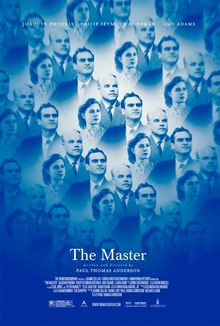
I rented it mainly because I have long been a big fan of Hoffman as an actor who disappears into roles (especially Capote), rather than just playing variations on himself. And The Master is more about character than plot — the plot itself could be summarized in one sentence.

Walking the dogs this morning, I started fantasizing that if there were a School of Esoteric Management, this movie could be shown in class, followed by lengthy discussion, because what esoteric group does not have its “Freddy Quells” (Phoenix’s character)?

Eighty years ago, the occultist Dion Fortune made dismissive references to “lecture room tramps,” the people who came to lectures and presentations by this teacher or that, but who never really committed to any system.

Freddie is not looking for teaching necessarily — he literally stumbles into “The Cause,” and “Lancaster Dodd” (Hoffman) decides to demonstrate his method of quick psychological breakthrough and cure on him. For a time, Freddie becomes a loyal follower, even a kind of enforcer. But in the end, he is too damaged for “The Cause.”

Esoteric groups always attract the psychological “walking wounded” who are looking for a quick fix and excitement. Even Jesus of Nazareth had Judas the Sicarius, who seemed OK for a while but was really the kind of unstable fanatic who today would strap on a suicide vest.

Animist Blog Carnival: Human Mating & Dating

Heather Awen has the summaries and links.

The Human Dating & Mating issue of the ABC gave me concerns from the beginning. I chose the topic because I do not know right relationship is with those with whom we have sex and romance. Animism is all about right relationship. Although I expected most writers to be as lost as I, I also hoped in their blog posts would be some inklings on which to muse. At the very least, I’d feel less alone.