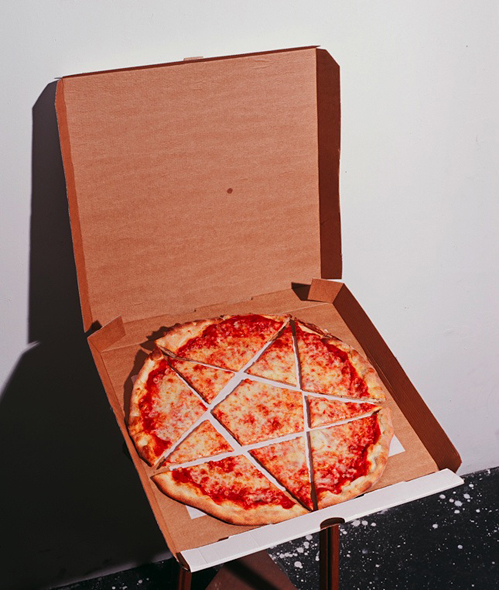
Data-Mining and Student Success

An article in the Chronicle of Higher Education discusses using data-mining techniques for better student advising.

One way to ensure that students will reach the finish line is to quickly figure out if they’ve selected a suitable track. So the Arizona State system front-loads key courses. For example, to succeed in psychology, a student must perform well in statistics.

“Kids who major in psych put that off, because they don’t want to take statistics,” Ms. Capaldi says. “They want to know, Does their boyfriend love them? Are they nuts? They take all those courses, then they hit statistics and they say, ‘Oh, God, I can’t do this. I can’t do experimental design.’ And so they’re in the wrong major. By putting those courses first, you can see if a student is going to succeed in that major early.”

Arizona State’s retention rate rose to 84 percent from 77 percent in recent years, a change that the provost credits largely to eAdvisor.

It might work.

My university has tried all the usual approaches:

  • Every faculty member must advise some undergraduates (particularly in their first year).
  • Certain trained faculty advisers will do it and be rewarded with release time.
  • Specialist staff advisers will do it, freeing up professors to teach.

I think I saw the whole cycle go around and start over again.

As a freshman at Reed College years ago, I was the victim of ineffectual advising. I was assigned to a professor of foreign languages. She was not informed about things outside her department. She just said OK to whatever courses I chose and signed the forms. It was not until my second year that I began to realize that I had made some bad choices in terms of meeting requirements and taking things in sequence. It took me another year to get straightened out and on track.

A more aware human adviser could have helped me sooner. For a university with complicated “distribution requirements,” a human adviser plus the data-mining might actually help a lot.


Pentagram Pizza: Academic Edition

• “Three Things You (Probably) Didn’t Know about Google Scholar” at GradHacker. I did not know about a couple of these features, like being able to track how often something you wrote has been cited, which can be either an ego boost or give you the feeling that you have been spitting into the Grand Canyon.

• The early issues of The Pomegranate, those edited and published by Fritz Muntean in Vancouver, BC., are now online. Go here and scroll down to the numbered issues 1–18 at the bottom. Yes, Equinox is (Brit. are) charging for articles, but book reviews and the readers’ forum downloads are free, and remember what I said about interlibrary loan.

• Egil Asprem reviews Stepchildren of Science, a book on the history of parapsychology in Germany. “In the fascinating last chapter Wolffram shows how the struggle between parapsychologists and academic psychologists also led to attempts, by both sides, to pathologise the other.” That sounds so familiar.

Critical Theory, Mere Description, and Pagan Studies

Some thoughts after reading Markus Davidsen’s review of the Handbook of Contemporary Paganism—and, by extension, of the entire field of Pagan studies.

Part of his critique does resonate with me. It raises an issue that I have thought about too.

When I saw that the first authority cited was Russ McCutcheon, I had a pretty good idea of where it was going.  McCutcheon is a former editor of the journal in which the essay appeared, among other things.

Davidsen himself identifies with the critical theorists such as McCutcheon who “no longer study religion or religious activity as such, but aim to analyze how people talk about religion, which social constructions people label religion, and how the resulting discourses serve to legitimate power structures.”

He stumbles in a couple of spots. For example, he seems to think that Unitarians, despite their name, are Christians, and therefore the Wiccans in Unitarian congregations must not be purely Pagan but somehow Christian as well. Yes, all of you in CUUPS are Christians—or so Markus Davidsen thinks.

Here we simply have a Danish scholar who does not know the history of an American religious denomination.

To move on to the substance, however—Davidsen regrets that so much study of religion takes place in by “religionists” who are “field-directed.” Of course, some of that is rooted in history and some is the job market: institutions often want someone to “teach Asian religions” or whatever.

Davidsen notes the absence of Ronald Hutton from the handbook, but given Hutton’s emphasis on the history of ideas and such chapters titles as “Finding a Goddess,” he would probably have dismissed him as a descriptive religionist as well.

But now the resonance. He faults much of the writing in that Brill Handbook (including mine) as being too “descriptive.” Nolo contendere.  I have often wondered if in Pagan studies (and in the study of new religious movements in general) we regard descriptive work as (a) necessary and (b) easier—or at least more obvious, easier to think about.

Necessary because, after all, don’t we have to adequately describe something before we can theorize about it? Of course, the horizon of the perfect description is always receding before us. 🙂

But how would the sort of critical theory that Davidsen calls for be applied to Pagan studies, and who is doing it? Certainly I would never say that Pagan studies should be immune to critical theory. Yes, talk and write about “which social constructions people label [Pagan] religion, and how the resulting discourses serve to legitimate power structures,” or whatever you like. But it won’t be the only way that people do Pagan studies.

“Season of the Witch”

On Peg Aloi’s recommendation, I recently watched Season of the Witch, also known as Hungry Wives.  As Peg mentioned, part of it is witchcraft-meets-Second Wave feminism, and part of it acknowledges the whole “occult explosion” of the late 1960s-early 1970s.

Maybe it it is what the old Bewitched series would have been if that show had any sort of edge to it.

Or Mad Men with a coven, bumped up to the early 1970s. (Hey, Mom had that couch!)

Enjoyable, and with enough twists that it rates three pentacles.


Own The Pomegranate’s Printer

No, I don’t mean CPI Antony Rowe, I mean the actual HP inkjet printer that for the last two years has churned out the mss. for editing and the page proofs.

It is for sale on eBay. Since there are many days when it never prints a page, however, I think that is fair to describe it as having had light home use.

I’m tossing in some extra black ink cartridges, which are the real expense of inkjet printers, and if you bid, win it, and tell me that you read this blog, I will add a copy of the latest Pomegranate.

The Historical Jesus and the Grizzly Bears

When it comes to who Jesus of Nazareth was, I tend to think that there is somebody behind the stories, a real person, not, for example, a mushroom. (Although that would make for great video.)

As Craig Keener argues in this column, it remains the simplest explanation at its counter-intuitive core:

Scholars’ confidence [in the historical Jesus] has nothing to do with theology but much to do with historiographic common sense. What movement would make up a recent leader, executed by a Roman governor for treason, and then declare, “We’re his followers”? If they wanted to commit suicide, there were simpler ways to do it.

On the other hand, there are people in some esoteric circles who think that the Jesus of the New Testament was a composite character, made of perhaps three individuals’ stories.

It works with grizzly bears.

Last month, on my birthday, M. and I made a sort of pilgrimage to the haunts of Old Mose, the last grizzly bear killed in central Colorado, on 30 April 1904. (The last known grizzly killed in Colorado died in 1979.)

When I lived in that county, I heard and read all the stories about how Old Mose was this terrible bear, killer of several humans and countless livestock, et cetera et cetera, who lived to be at least forty years old.

But a Colorado historian who dug into the story and conducted some elementary scientific research made a good case that Old Mose’s legend conflated the lives of at least three bears between the early 1880s and 1904. The big male grizzly killed in 1904 was simply too young to have done all that.

And this in an era of (by 1904) telephones, telegraphs, electric lights, railroads, and newspapers, not an antiquity of oral wonder stories and hand-copied manuscripts.

If it happens with bears, I wondered at the time, could it happen with prophets?

Still, I lean towards the single-Jesus theory. And if I could choose between bringing a messianic Jewish wonder-worker or a big grizzly bear back to walk this earth, I know which one I would pick.

How I Spent My Afternoon

I don’t know where the morning went — this and that, some fire department communications — but then I started assembling the next issue of The Pomegranate, and immediately encountered the Lithuanian typography issue.

As in, some of the special characters, such as e-with-a-dot-over-it, are not in our normal font, Book Antiqua.

But ah, Book Antiqua is derived from Palatino (my favorite default font), and my installation of Palatino has all those characters.

So it’s point-and-select-and-change fonts for about half an hour until every special Lithuanian character in the article is changed to Palatino, which is slightly narrower but has about the same x-height as Book Antiqua.

And, oh yes, the bibliography has to be checked and uploaded to the Equinox website for some indexing purposes and also sent to the guy in England who does the Digital Object Identifiers.

At which time it is beer-thirty.

This is after all the original editing, the selecting and working with peer reviewers, the interaction with the two authors, and the re-editing.

And there are people who complain about the cost of academic journals and who think that everything should be free.

Well, you naïve whiners and whingers, who is going to do what I have been doing for no pay whatsoever? I’m nowhere near finished. There will be more hours of work in Adobe InDesign and on the web before the issue is ready for the printer — who also expects to be paid, and not in rainbows and unicorns.

You, impoverished graduate student, haven’t you learned how to do interlibrary loan yet? Get a librarian to show you how, or go the university’s library website.

And if you do not have a university affiliation are you not aware that many public libraries have inter-library loan librarians? Or that you can walk into most state university libraries, make nice, and get a “patron” card that includes various borrowing services?

You only have to pay retail for downloaded articles from academic publishers if you need them right now.

Puppy Mills for the Gods

When I read an article like “Millions of Mummy Puppies Revealed at Egyptian Catacombs,” I realize how little we know about what was really going on with popular religion there centuries ago.

It’s one thing to study the tombs of high-ranking individuals. We still put high-ranking individuals in fancy tombs, and we make pilgrimages to them. I have stood teary-eyed just contemplating the tomb of Thomas Jefferson, for example.

But puppy mills for the gods?

They estimate the catacombs contain the remains of 8 million animals. Given the sheer numbers of animals, it is likely they were bred by the thousands in puppy farms around the ancient Egyptian capital of Memphis, according to the researchers. The Dog Catacombs are located at Saqqara, the burial ground for the ancient capital Memphis.

“Our findings indicate a rather different view of the relationship between people and the animals they worshipped than that normally associated with the ancient Egyptians, since many animals were killed and mummified when only a matter of hours or days old,” Nicholson said. “These animals were not strictly ‘sacrificial.’ Rather, the dedication of an animal mummy was regarded as a pious act, with the animal acting as intermediary between the donor and the gods.”

If that is not sacrifice — what is? Giving something to get something is part of what sacrifice is about, isn’t it?

Ancient Egyptian religion has this bureaucratic feeling to it—all of those catacombs and holes like post office boxes full of dead things. They even mummified cuts of meat for tomb offerings (go through the photo sequence). I wonder if about 80 percent of the country’s linen production went into wrapping up bodies to be put away.

(Meanwhile, in ancient Scotland, they were doing funny things with skeletons.)

Call For Papers, Presentations, Workshops, Rituals and Performances Mapping the Occult City: Exploring Magick and Esotericism in the Urban Utopia

A pre-conference for the Annual Meeting of the American Academy of Religions in Chicago, on Friday November 16, 2012, presented by Phoenix Rising Academy and DePaul University.

In his classic essay, “Walking in the City,” ethnologist and historian Michel de Certeau distinguished between the “exaltation of a scopic and gnostic drive” that comes from viewing the city from a high vantage point and the quotidian negotiations of the walker at street level, who creates his or her own map, takes shortcuts and resists the strategies of typical urban planning.

One perspective is totalizing and distancing, constructing an illusory, unified view of the metropolis, while the other seeks out hidden avenues of knowledge and intersections of stories, myths, and happenings. The occultist tends to shift between both views, sometimes spinning grand narratives of the city as a New Atlantis, a utopian civilization of knowledge and wonder, other times imagining a secret world of dark mysteries, unknown to most passersby, that lay just beyond the twilight of the streetlamps.

Many esotericists, conspiracy theorists, and urban fantasy authors have speculated on the occult meaning of symbols, monuments, and architecture in major cities, from Cleopatra’s Needle in London to the Washington Monument in Washington D.C. Or they see powerful sigils in the neon signs, building facades and billboards. Some speak of urban ley lines and “energy centers” that bubble with occult power ready to be tapped into by those with the right sense and ability. These energy centers are focused on geometric street patterns or the lines created by the placement of sacred sites in the city, such as churches, temples, and cemeteries. Others speak of haunted places, charged with story and legend, often full of the sense of violence, trauma and the urgency of events that occurred there.

Historically, cities have been home to countless esoteric groups who have met, planned, and conducted ritual within the towering buildings that glitter the metropolitan skyline.

For instance, Chicago, the location of this year’s AAR conference, was once the home of the 32 floor Masonic Building, owned by the Illinois Freemasons, and the tallest building in the world in 1892. Prominent figures in the esoteric world have spoken, performed and offered their wisdom to the masses through the many salons, lectures, performances, congregations, conferences, and world’s fairs that have been either publicly advertised or available only to those with the right password and invitation.

Cities are where the ideas of Western esotericism spread to the masses through these public events and the many urban publishing houses. Cities are also home to public events and happenings that connect the esoteric, the theatrical and the political world through protest and public actions and happenings, such as the W.I.T.C.H. protests at Chicago’s Federal Building on Halloween 1969.

Finally, cities are centers of diversity and diaspora and often become hothouses for the development of hybrid traditions based on immigrant cultures, such as Santeria and Vodun. For scholars of magick and esotericism, cities like Chicago can offer up rich resources for tracking group activities and events through library archives and public records.

Understanding occult life in the city, in both its historical and contemporary contexts, is crucial in mapping the proliferation of ideas and connections between practitioners and traditions. Popular practical texts have addressed how the practice of magick changes in an urban setting, especially when the magician or witch must adapt a nature-centered practice to a city-based practice.

nvestigating esoteric actions in the city can reveal the ways in which the practitioner is caught up and complicit with strategic structures of power while also offering possibilities for the occultist to resist those structures through the kind of tactical, magical moves described by de Certeau. As the Occupy movement and other political protests proliferate, especially in America’s election year, what are the possibilities for harnessing and directing the energy of the occult city?

Phoenix Rising Academy would like to explore these intersections of the esoteric and the urban, focusing on the city as a locus for power and knowledge, both hidden and revealed. Are cities oppressive entities that stifle creative and esoteric drives or do they hold in their structures the potential for powerful action? To this end, we invite scholars and practitioners to submit proposals for papers, presentations, rituals and performances that address these questions pertaining to the occult city.

Though our focus is primarily on American cities, particularly Chicago, we welcome explorations in other prominent global metropolitan centers. For this pre-conference, we plan on creating 2-3 panels of papers, presentations, performances, rituals, workshops, roundtables, or discussion groups.

Possible topics may include (but are not limited to)

• The activities of certain groups, traditions, and communities, both historical and contemporary, in particular cities.

• The city life of prominent esoteric figures and how that city life shaped their ideas and practices. · Particular events, meetings, lectures, performances, happenings, protests whose urban setting featured prominently in their execution and influence.

• The mythology of the occult city, based on legend, occult symbolism, and esoteric symbolism of architecture and urban planning.

• A practical approach to working magick and ritual in the city, perhaps based on Urban Shamanism or Chaos Magick.

• Interpretations of the city and its occult power by urban fantasy authors.

• The intersections of the occult and the political through the use of ritualized protest actions, focusing on setting and urban scene.

• Though not focusing on hauntings per se, an investigation of spiritualism, mysticism and psychic practices prominent in urban settings.

• A study of how hereditary or hybridized indigenous practices survive, evolve and adapt in an urban setting.

With your submission, please include the following: Presenter information (name, mailing and email addresses, phone number) Type of presentation (paper, non-paper presentation, workshop, performance, roundtable).

Note: if you are proposing a roundtable discussion, please submit info for all participants. Title and affiliation (institution, organization, independent scholar, or practitioner). Proposal or abstract (not to exceed 250 words). Should include title of presentation and a clear description of the presentation’s intent, plus any audio/visual needs. Biographical data (not to exceed 200 words).

Please email all submissions by August 20th to Dr. Jason L. Winslade, DePaul University, jwinslad@depaul.edu. Please include “PRA Pre-Conference” in the subject line. All submissions will be reviewed and you will be notified of a decision one week after the deadline

Pentagram Pizza: Some Good Reads and Free Music

• Finding a complementary relationship between Paganism and Tantra at The Pagan Perspective. Not this:

My sabbatical led me down the rabbit hole of tantra, or rather neo-tantra, which turned out to be nothing more than a mobsterized store front for polyamory and polysexuality. Now I am the last person to dismiss sexuality or the free expression of it; however, when sexuality becomes a religion in disguise, we lose something of both sexuality and religion.

• Download a free compilation album, Songs of the Goddess.

• Edward Butler, who has published two articles in The Pomegranate, has put them and some other material into a book: Essays on a Polytheistic Philosophy of Religion.

• Occult Chicago links to an old article about a “spirit photographer” of that city. Some people sure did want to believe, didn’t they.