Puppy Mills for the Gods

When I read an article like “Millions of Mummy Puppies Revealed at Egyptian Catacombs,” I realize how little we know about what was really going on with popular religion there centuries ago.

It’s one thing to study the tombs of high-ranking individuals. We still put high-ranking individuals in fancy tombs, and we make pilgrimages to them. I have stood teary-eyed just contemplating the tomb of Thomas Jefferson, for example.

But puppy mills for the gods?

They estimate the catacombs contain the remains of 8 million animals. Given the sheer numbers of animals, it is likely they were bred by the thousands in puppy farms around the ancient Egyptian capital of Memphis, according to the researchers. The Dog Catacombs are located at Saqqara, the burial ground for the ancient capital Memphis.

“Our findings indicate a rather different view of the relationship between people and the animals they worshipped than that normally associated with the ancient Egyptians, since many animals were killed and mummified when only a matter of hours or days old,” Nicholson said. “These animals were not strictly ‘sacrificial.’ Rather, the dedication of an animal mummy was regarded as a pious act, with the animal acting as intermediary between the donor and the gods.”

If that is not sacrifice — what is? Giving something to get something is part of what sacrifice is about, isn’t it?

Ancient Egyptian religion has this bureaucratic feeling to it—all of those catacombs and holes like post office boxes full of dead things. They even mummified cuts of meat for tomb offerings (go through the photo sequence). I wonder if about 80 percent of the country’s linen production went into wrapping up bodies to be put away.

(Meanwhile, in ancient Scotland, they were doing funny things with skeletons.)

Call For Papers, Presentations, Workshops, Rituals and Performances Mapping the Occult City: Exploring Magick and Esotericism in the Urban Utopia

A pre-conference for the Annual Meeting of the American Academy of Religions in Chicago, on Friday November 16, 2012, presented by Phoenix Rising Academy and DePaul University.

In his classic essay, “Walking in the City,” ethnologist and historian Michel de Certeau distinguished between the “exaltation of a scopic and gnostic drive” that comes from viewing the city from a high vantage point and the quotidian negotiations of the walker at street level, who creates his or her own map, takes shortcuts and resists the strategies of typical urban planning.

One perspective is totalizing and distancing, constructing an illusory, unified view of the metropolis, while the other seeks out hidden avenues of knowledge and intersections of stories, myths, and happenings. The occultist tends to shift between both views, sometimes spinning grand narratives of the city as a New Atlantis, a utopian civilization of knowledge and wonder, other times imagining a secret world of dark mysteries, unknown to most passersby, that lay just beyond the twilight of the streetlamps.

Many esotericists, conspiracy theorists, and urban fantasy authors have speculated on the occult meaning of symbols, monuments, and architecture in major cities, from Cleopatra’s Needle in London to the Washington Monument in Washington D.C. Or they see powerful sigils in the neon signs, building facades and billboards. Some speak of urban ley lines and “energy centers” that bubble with occult power ready to be tapped into by those with the right sense and ability. These energy centers are focused on geometric street patterns or the lines created by the placement of sacred sites in the city, such as churches, temples, and cemeteries. Others speak of haunted places, charged with story and legend, often full of the sense of violence, trauma and the urgency of events that occurred there.

Historically, cities have been home to countless esoteric groups who have met, planned, and conducted ritual within the towering buildings that glitter the metropolitan skyline.

For instance, Chicago, the location of this year’s AAR conference, was once the home of the 32 floor Masonic Building, owned by the Illinois Freemasons, and the tallest building in the world in 1892. Prominent figures in the esoteric world have spoken, performed and offered their wisdom to the masses through the many salons, lectures, performances, congregations, conferences, and world’s fairs that have been either publicly advertised or available only to those with the right password and invitation.

Cities are where the ideas of Western esotericism spread to the masses through these public events and the many urban publishing houses. Cities are also home to public events and happenings that connect the esoteric, the theatrical and the political world through protest and public actions and happenings, such as the W.I.T.C.H. protests at Chicago’s Federal Building on Halloween 1969.

Finally, cities are centers of diversity and diaspora and often become hothouses for the development of hybrid traditions based on immigrant cultures, such as Santeria and Vodun. For scholars of magick and esotericism, cities like Chicago can offer up rich resources for tracking group activities and events through library archives and public records.

Understanding occult life in the city, in both its historical and contemporary contexts, is crucial in mapping the proliferation of ideas and connections between practitioners and traditions. Popular practical texts have addressed how the practice of magick changes in an urban setting, especially when the magician or witch must adapt a nature-centered practice to a city-based practice.

nvestigating esoteric actions in the city can reveal the ways in which the practitioner is caught up and complicit with strategic structures of power while also offering possibilities for the occultist to resist those structures through the kind of tactical, magical moves described by de Certeau. As the Occupy movement and other political protests proliferate, especially in America’s election year, what are the possibilities for harnessing and directing the energy of the occult city?

Phoenix Rising Academy would like to explore these intersections of the esoteric and the urban, focusing on the city as a locus for power and knowledge, both hidden and revealed. Are cities oppressive entities that stifle creative and esoteric drives or do they hold in their structures the potential for powerful action? To this end, we invite scholars and practitioners to submit proposals for papers, presentations, rituals and performances that address these questions pertaining to the occult city.

Though our focus is primarily on American cities, particularly Chicago, we welcome explorations in other prominent global metropolitan centers. For this pre-conference, we plan on creating 2-3 panels of papers, presentations, performances, rituals, workshops, roundtables, or discussion groups.

Possible topics may include (but are not limited to)

• The activities of certain groups, traditions, and communities, both historical and contemporary, in particular cities.

• The city life of prominent esoteric figures and how that city life shaped their ideas and practices. · Particular events, meetings, lectures, performances, happenings, protests whose urban setting featured prominently in their execution and influence.

• The mythology of the occult city, based on legend, occult symbolism, and esoteric symbolism of architecture and urban planning.

• A practical approach to working magick and ritual in the city, perhaps based on Urban Shamanism or Chaos Magick.

• Interpretations of the city and its occult power by urban fantasy authors.

• The intersections of the occult and the political through the use of ritualized protest actions, focusing on setting and urban scene.

• Though not focusing on hauntings per se, an investigation of spiritualism, mysticism and psychic practices prominent in urban settings.

• A study of how hereditary or hybridized indigenous practices survive, evolve and adapt in an urban setting.

With your submission, please include the following: Presenter information (name, mailing and email addresses, phone number) Type of presentation (paper, non-paper presentation, workshop, performance, roundtable).

Note: if you are proposing a roundtable discussion, please submit info for all participants. Title and affiliation (institution, organization, independent scholar, or practitioner). Proposal or abstract (not to exceed 250 words). Should include title of presentation and a clear description of the presentation’s intent, plus any audio/visual needs. Biographical data (not to exceed 200 words).

Please email all submissions by August 20th to Dr. Jason L. Winslade, DePaul University, jwinslad@depaul.edu. Please include “PRA Pre-Conference” in the subject line. All submissions will be reviewed and you will be notified of a decision one week after the deadline

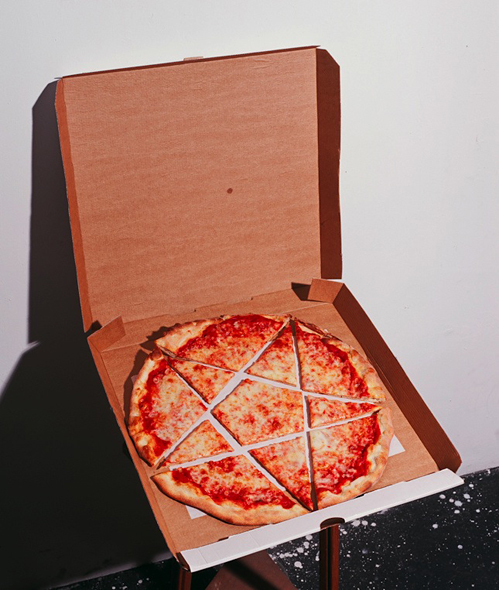
Pentagram Pizza: Some Good Reads and Free Music

Finding a complementary relationship between Paganism and Tantra at The Pagan Perspective. Not this:

My sabbatical led me down the rabbit hole of tantra, or rather neo-tantra, which turned out to be nothing more than a mobsterized store front for polyamory and polysexuality. Now I am the last person to dismiss sexuality or the free expression of it; however, when sexuality becomes a religion in disguise, we lose something of both sexuality and religion.

Download a free compilation album, Songs of the Goddess.

• Edward Butler, who has published two articles in The Pomegranate, has put them and some other material into a book: Essays on a Polytheistic Philosophy of Religion.

Occult Chicago links to an old article about a “spirit photographer” of that city. Some people sure did want to believe, didn’t they.

Currents in Esoteric Studies

The current newsletter of the European Society for the Study of Western Esotericism is available for download. In it, some of the members discuss their current doctoral work. It is always interesting to see how new scholars are formulating just exactly what “esoteric studies” covers.

Like Pagan studies — there is some degree of overlap — esoteric studies (if I may personify it) struggles to find out who it is. Egil Asprem, doctoral candidate and blogger, writes,

On the one hand, you often hear that the field has now matured, but when you look for some of the signs that characterise a mature academic field it is hard to see them in practice. I am particularly thinking of the lack of agreement on fundamental issues, such as ”what is it”, ”how do we study it”, ”what’s its importance”, and ”how is it related to the broad spectrum of human activity”. If you pick up the three most popular introduction books to the field, you’ll find three very different ways of handling these fundamental questions.

Kocku von Stuckrad, an established scholar but still “younger” in academic terms, makes the comparison:

It is a kind of identity work that I perceive in the study of esotericism, but also in ”pagan studies” and related fields of research. This identity work often leads to a neglect of critical methodological reflection, which I find problematic. What we need is an active collaboration with as many colleagues as possible, no matter whether or not we like their definitions of esotericism, in order to build up networks that can make research into these historical and cultural dynamics sustainable for the future. If we study these phenomena as part of the cultural history of Europe and North America, in an increasingly globalized perspective, we will be able to integrate the field of Western esotericism” in larger research structures and critical scholarship. This will also help students who enroll in our programs to find a job after their studies.

More resources in the newsletter about courses and research opportunities, chiefly in Britain and the Netherlands.

Quick Review: The Aleppo Codex

If you liked The Da Vinci Code or The Historian or The Name of the Rose, you might enjoy The Aleppo CodexThe difference is that it is a factual story, and its context is modern Syria and Israel, not medieval Europe.

From the dust jacket: “It’s a tale that involves grizzled secret agents, pious clergymen, shrewd antiquities collectors, and highly placed national figures who, as it turns out would do anything to get their hands on an ancient decaying book.”

The codex in question was created in the tenth century by an expert scribe and a noted rabbi working together. The scribe could write Hebrew like it came out of a laser printer, as the author will later note, while the rabbi then added various marginal notes to the completed pages. Unlike the Torah scrolls used in synagogues, this parchment book was designed to be the most accurate and complete reference edition of the entire Hebrew Bible.

It was looted when the Crusaders captured Jerusalem 170 years later, ransomed by Egyptian Jews, studied by Maimonides, then somehow later transported to the chief synagogue of Aleppo in northern Syria.  The codex, now known as the “Crown of Aleppo,” was no longer read but functioned more as a talisman for the Jewish community.

There in November 1947, angered that the United Nations had approved creation of the state of Israel, a Muslim mob attacked Jewish homes and businesses and trashed the synagogue.  Most of the Crown’s pages were recovered after the synagogue was vandalized during the riot—but then the story grows murky, foggy, and complicated.

When author Matti Friedman, a Canadian-born reporter working in Jerusalem, becomes intrigued with the story of how (and how much of) the Crown came to be in an Israeli museum, one of his sources tells him, “You’re entering a minefield . . . . There are traps and pitfalls and mirages and cats guarding the cream. Say the wrong thing to the wrong person, and ten other doors will slam shut.”

Trying to write the modern story of the codex, Friedman enters a world where public records disappear, where histories have large gaps, and where passions run high. One murder possibly connected with the Crown causes him to write that it was a “story could have been written by Agatha Christie, if Agatha Christie were an ultra-Orthodox Jew.”

A typical interaction goes like this:

My conversation with Zer followed the usual pattern for exchanges with people in the Aleppo Codex Underground: they would float vague pieces of information to see if I knew more than they did, and I did the same.

It is not the information within the codex that makes it so important, but its enormous significance as tangible Judaica—like a lost emperor’s crown or the Holy Grail, it is important for its associations.

Not coincidentally, another of his collaborators, the grizzled retired Mossad agent referred to on the dust jacket, describes how as bullets were still flying in the Six-Day War of 1967, he and an Israeli colonel traveled to Bethlehem in search of one of the Dead Sea Scrolls believed held by an antiquities dealer there. Eventually the dealer sells it to the government for a high price—but it is an offer that he cannot refuse.

Not only was the new state of Israel seeking to bring back Jews from all over the world, it was determined by any means necessary to bring back texts connected with Jewish history, and in that determination lies the probable explanation of what happened to the Aleppo codex.

Europe’s Oldest Paganism

At Forging the Sampo, a link to a short documentary video on the revived Pagan religion of the Mari people of the former Soviet Union. (Wikipedia entry on Mari-El.)

Massive sacrificial feasts, accordions, sacred oaks and groves, priests in tall woolen hats, even a sort of Bigfoot reference — what’s not to like?

I have been reading chapters from a forthcoming book on revived Paganism in Central and Eastern Europe, which includes a chapter on the Mari by Boris Knorre, who writes,

Even during the Soviet times, within the isolated rural population of the Mari, certain elements remained well preserved: local and family prayers, reverence for the sacred grove, and similar “private” practices of the tradition. In the 1990s, some urban intellectuals among the Mari initiated an active process of restoration of the native faith. The conduct of these Pagan rituals extended the boundaries of family tradition into public space, and at this time public communal sacrifices and prayers reemerged. In the Republic of Mari El, there are six hundred holy groves (kusoto), of which the majority have been taken under the protection of the state.

I look forward to being able to promote the entire volume when it is published.

Business Opportunity for the Next Generation

Tattoo removal. It‘s starting to take off (pun intended).

The psychological motivations for tattoo removal (change of lifestyle and relationship status, changes in body and skin over the years, upward mobility in society and employment, etc.) are a constant, and will lead to an even larger market for tattoo removal than currently exists today.

And some related critiquing:

By enlarging ourselves with tattoos, we’re belittling ourselves in the process. It’s a sign of our low expectations that having control over flesh decorations is considered to be the limit of our capacities as an individual.

Kind of related—how do you as a priest dress to be counter-hip so that hipsters will “relate” to you? We’ve been down this road before. Anyone remember “folk Masses” with tambourines?

Be authentic. Be real. Invest in a chain of tattoo-removal clinics. That is all.

Critiquing Pagan Studies

Several friends mentioned today an essay based on the Handbook of Contemporary Paganism   (Leiden: Brill, 2009) which in its abstract makes this critique:

[The essay] demonstrates that pagan studies is dominated by the methodological principles of essentialism, exclusivism, loyalism and supernaturalism, and shows how these principles promote normative constructions of ‘pure’ paganism, insider interpretations of the data, and theological speculations about gods, powers, and a special “magical consciousness.” It seems thus that the methodological discussions in MTSR have little effect on pagan scholars. In the concluding discussion, I raise the questions why this is so, and how we might do better in promoting a naturalist and theoretically oriented approach to studying religion.

I made an interlibrary-loan request for the article — or extended book review, whichever it is— and will read it with interest. Off-hand, I see a couple of issues. First, the one source is a reference book, one that sells for a high price and will be available in limited places.

In my experience, contributors (and I was one) to such books tend to summarize their work but not to break new ground. The new thinking appears in conference papers, in journals such as The Pomegranate, in monographs, and in more focused edited collections, as opposed to reference books.

Second, Pagan studies includes more than potential readership of Method & Theory in the Study of Religion. In  Pomegranate alone you will find anthropologists, sociologists, folklorists, scholars of Western esotericism, and historians publishing as well as religious-studies scholars of various sorts. Their methodologies and theoretical perspectives are going to be different as well.

Nevertheless, Markus Altena Davidsen‘s  accusations of essentialism, exclusivism, loyalism, and supernaturalism are calculated to discredit the field by suggesting that its practitioners lack (from his perspective) theoretical rigor.

Ironically, those are the qualities that critics such as Ben Whitmore want to accuse scholars of Paganism of failing to display in sufficient quantity.

Without having yet read the article, I would say that Davidsen identifies a possible cliff that Pagan studies could go over. That it has indeed gone over such a cliff, I dispute.

To switch metaphors, I would not want to see scholars of Paganism build the walls of their own ghetto, and as much as I can, I will struggle against that impulse when it arises.


Ten Pagan Authors Interviewed

The editors of The Wiccan/Pagan Times have taken ten interviews with contemporary Pagan authors and published them in ebook and paperback format.

Presented here are some of the many memorable interviews we have published over the last 13 years. We have taken 10 of these interviews and put them together with author bios, pictures and weblinks so you can explore the authors further.

Interviewed are Anna Frankin, Dorothy Morrison, Edain McCoy, John Michael Greer, Kristin Madden, M. R. Sellars, Margot Adler, Patricia Telesco, Raymond Buckland and Yasmine Galenorn. Preserved here is a place in time within the pagan community when we were still new, but growing. We feel these interviews convey the flavor and the heart of the pagan community.

I have ordered it.

The Wizard and the “Reality” Ghosthunters

Oberon Zell, co-founder of the Church of All Worlds and headmaster of the Grey School of Wizardry, looks to have a bit part in a reality TV series, Ghost Girls. Its Facebook page calls it “an off-beat Supernatural/Reality Based TV show pilot about three ‘Real’ claravoyant [sic], beautiful women, who also happen to be divas of the supernatural. They and thier [sic] unusual friends commune with ghosts, and seek the unusual and unexplained mysteries.”

“Uncle Oberon” hopes to see some product placement for some of his Mythic Images Collection as well. And why not? They might as well decorate the set with real Pagan art, instead of something just “faked up” (to use Gerald Gardner’s phrase) for the filming.