Tag Archives: scholarship

Creative Visualization Doesn’t Work?

Or so claim researchers who publish in the Journal of Experimental Social Psychology.

Or is it just fantasies (winning the lottery, etc.) that don’t work?

But ultimately, Happes and Oettingen believe that positive fantasies are likely to scupper your changes of obtaining your goals. “Instead of promoting achievement, positive fantasies will sap job-seekers of the energy to pound the pavement, and drain the lovelorn of the energy to approach the one they like,” they write. “Fantasies that are less positive – that question whether an ideal future can be achieved, and that depict obstacles, problems and setbacks – should be more beneficial for mustering the energy needed to obtain success.”

What do you think of the experiment design compared to an actual visualization?

And this zinger at the end:

This study isn’t the first to explode the myth of a traditional self-help tool. A 2009 paper found that repeating positive mantras about themselves led people low in self-esteem to feel worse.

Caroline Tully Interviews Ronald Hutton

Australian blogger and graduate student Caroline Tully interviews Ronald Hutton on her blog, Necropolis Now.

One excerpt:

In that case what is your relationship with Paganism?

It has been long and close. As I mentioned in my book Witches, Druids and King Arthur, I was in fact brought up Pagan, in a modern English tradition which combined a reverence for the natural world with a love of the ancient Greek and Roman classics. I have been acquainted with Wiccan witches since my teens: I learned some things from Alex Sanders in his hey-day, and attended my first Wiccan rite at Halloween 1968. I have never undergone a conversion experience to any religion, and so my relationship with others, such as Christianity, is one of entirely benevolent neutrality. Over the years, I came to build up friendships with more or less all of the leading figures of British Paganism. For example, Doreen Valiente’s respect for me meant that I was one of the few people whom she specified should be invited to her funeral, a gesture which still deeply moves me.

My attitude to the history of modern Pagan witchcraft has altered with changing knowledge of it. Back in the 1960s I believed, following scholarly orthodoxy, that the witchcraft of the early modern European witch trials was a pagan religion. In 1973 I debated against the historian Norman Cohn (author of Europe’s Inner Demons (1975), the work that accused Margaret Murray of having tampered with her sources to make them conform to her ideas about witchcraft) at Cambridge University, where I defended the historical legitimacy of Charles Godfrey Leland’s ‘witches’ gospel’, Aradia, and was floored by him. After that, as I read more and more of the new research and checked the original records (for England and Scotland) myself, my belief in the idea that witches were members of an ancient pagan religion gradually evaporated.

So, you are not actually hostile to Paganism as some people seem to think?

The story of my life would be inexplicable if that were the case.

The forthcoming issue of The Pomegranate, now in press, will carry a review essay by Hutton—a retrospective of his own work and a response to some of his critics—as well as some related reviews on the topic of Wiccans and their relationship to history.

Some of this material will be available free on the Web, and I will post links as soon as I can.

AAR 2011 Pagan Studies Sessions

For those of you attending this year’s American Academy of Religion meeting in San Francisco, here is a preliminary schedule of the Contemporary Pagan Studies Group’s sessions.

The Tibetan Book of the Dead—A Biography

At The Magonia Blog (which I am adding to my blogroll), a review about W.Y. Evans-Wentz’s well-known translation of The Tibetan Book of the Dead. Only it was not his translation nor even, precisely, the “Tibetan Book of the Dead”:

Walter Yelling Wentz – it was only as an adult that he adopted in addition his mother’s maiden name of Evans – was born in Trenton, New Jersey, in 1878, and later moved to southern California with his family, where he would receive a diploma from the Raja-Yoga School and Theosophical University at Point Loma. He later obtained an M.A. in English from Stanford University, travelled to Europe, and was awarded a Bachelor of Science in Anthropology at Oxford. Having spent most of the First World War in Egypt, he travelled to India, where he became “a great collector of texts in languages he never learned to read”.

In Darjeeling he purchased some Tibetan block prints, and had them translated by Kazi Dawa Samdup, an English teacher at a boy’s boarding school in Gangtok, the capital of the small Himalayan kingdom of Sikkim, who worked on them every morning before lessons for two months. These provided Evans-Wentz with the material for three books, The Tibetan Book of the Dead (1927, the title an imitation of the Egyptian Book of the Dead published in England by Wallis Budge). Tibetan Yoga and Secret Doctrines (1935), and The Tibetan Book of the Great Liberation (1954). One point that was not made clear in the first of these was that it was only a small portion of a large corpus of similar works, and did not include the part most commonly used in Tibet.

Princeton University Press is doing a series about the “lives” of famous religious texts, of which this is one: “the bible of the hippie movement,” as the reviewer calls it.

Occultism and Mushrooms

Not necessarily psychotropic mushrooms. To learn more about them, read Andy Letcher’s Shroom or the works of Paul Stamets, Dale Pendell, etc.

These are metaphorical mushrooms—or mushrooms as metaphor—from an article by Wouter Hanegraaff on the German scholar of esotericism Will-Erich Peuckert (1895-1969):

To me, [Peuckert’s] book [Pansophie] breathed  an unmistakable mycological atmosphere: the mushrooms I used to collect during my trips through the forest, and the strange ideas and personalities that Peuckert had collected during his forays through the tangled woods of early modern history, simply “smelled” the same. The effect of the book had a lot to do with Peuckert’s inimitable prose … by which he introduced his readers to a forgotten world that seemed to be suffused with the same mysterious atmosphere of magic and fairy tales which, to me, had always given mushrooms their special attraction. Whereas green plants, trees and flowers flourish in broad daylight for all to see, mushrooms were half-hidden creatures of twilight, ambiguous and potentially poisonous plants-that-are-not-really-plants (what were they, really?) associated by popular tradition with the forbidden domains of magic and witchcraft. In short, mushrooms might be defined metaphorically as the occult in biology—and conversely, one could say that Peuckert now introduced me to what seemed like the mushrooms of history. Just as mushrooms grow in the autumn and are thus associated with decay and the decline of the life cycle, Peuckert described the magic of the fifteenth and sixteenth centuries as the final flowering of a grand worlview in decline, inevitably doomed to be dissolved by the rise of bourgeois culture.

Wouter J. Hanegraaff, “Will-Erich Peukert and the Light of Nature,” in Esotericism, Religion, and Nature, ed. Arthur Versluis, et al. (Minneapolis: Association for the Study of Esotericism, 2010), 282-83.

How to Read an Academic Journal

It’s not Harry Potter,” writes Rob “Instant Mentor” Weir at Inside Higher Education.

Students register surprise when I confess that I share some of their frustrations over academic writing. Quite a few scholars are dreadful writers. There is, in my view, entirely too much pretentiousness, jargon, and affected weightiness oozing from journal pages. That’s why the first thing I tell students is to identify their purpose for consulting a professional work. What do they hope to extract? Do they need to learn from the author’s theoretical perspective, or mine the piece for examples? Are they reading it to contribute to a class discussion, or to collect perspectives to use in a paper? These matters determine their reading strategy.

Read the whole thing. It’s short. You can even skim.

The Pomegranate 12:1

I have let weeks go by without mentioning the latest issue of The Pomegranate: The International Journal of Pagan Studies!

Here is the table of contents. All book reviews and article abstracts are free.

Articles

“Franz Sättler (Dr. Musallam) and the Twentieth-Century Cult of Adonism”
Hans Thomas Hakl

“Walk Like an Egyptian: Egypt as Authority in Aleister Crowley’s Reception of The Book of the Law”
Caroline Tully

“On the Pagan Parallax: A Sociocultural Exploration of the Tension between Eclecticism and Traditionalism as Observed among Dutch Wiccans
Léon van Gulik

Special Section: Idolatry and Materiality

“Re-examining ‘Idolatry’ in Pagan Studies”
Chas S. Clifton

“Idolatry, Ecology, and the Sacred as Tangible”
Michael York

“Response to Michael York’s ‘Idolatry, Ecology and the Sacred as Tangible’ ”
Mogg Morgan

“Pagans and Things: Idolatry or Materiality?”
Amy Whitehead

“Idolatry, Paganism, and Trust in Nature”
Bron Taylor

Book Reviews

Dave Evans and Dave Green, eds. Ten Years of Triumph of the Moon (Bristol: Hidden Publishing, 2009).
Samuel Eldon Wagar

Constance Wise, Hidden Circles in the Web: Feminist Wicca, Occult Knowledge, and Process Thought (Lanham, Md.: AltaMira Press, 2008).
Paul Reid-Bowen

de Angeles, Ly, Emma Restall Orr and Thom van Dooren, eds., Pagan Visions for a Sustainable Future (Woodbury, Minn.: Llewellyn Publications, 2005)
Leland Glenna

Tyr: Myth-Culture-Tradition, Volumes 1 (2002), 2 (2003-04), and 3 (2007-08), ULTRA Publishing, Atlanta, Georgia.
Michael Strmiska

David Waldron & Christopher Reeve, Shock! The Black Dog of Bungay (London:, Hidden Publishing, 2010)
Dave Evans

CFP: Religious and Literary Satanism

Contemporary Religious SatansimCall for papers:

Satanism is a subject that has always drawn a lot of media attention as well as interest from the general public. Scholarly studies of the subject, however, have more often focused on socially constructed “Satanic Panics” than on Satanism as a religious alternative in itself.

Recently, this has begun to change, and anthologies such as Contemporary Religious Satanism have started to fill the gaps in scholarly knowledge concerning Satanism.

A further attempt to remedy the situation was made when the first ever international scholarly conference on Satanism was organized in Trondheim, Norway, in 2009. The conference was a great success, and resulted in an anthology that will be published by Oxford University Press later this year.

In September 2011, we welcome you to Stockholm, Sweden for the follow-up to 2009’s gathering of specialists.

Keynote speaker: Marco Pasi

Deadline for abstracts: May 22, 2011.
Submit your abstract to per.faxneld@rel.su.se<mailto:per.faxneld@rel.su.se> and kennet.granholm@rel.su.se<mailto:kennet.granholm@rel.su.se> (remember to submit abstracts to both organisers).

Papers dealing with most aspects of Satanism are welcome (including Satanism in literature, cinema, etc). However, we discourage papers treating “the Satanic panic”, “Satanic ritual abuse”, etc, as these themes have received sufficient scholarly attention.

Conference fee will be announced later.

CFP: Canadian Pagan Conference

Gaia Gathering: Canadian National Pagan Conference

Theme: Language to Liturgy

Gaia Gathering was founded in 2004 and had its first conference in 2005. Each year the conference is hosted over the Victoria Day long weekend in a different Canadian city through a bidding process similar to the Olympics. Past host cities include Edmonton, Halifax, Winnipeg, Ottawa and Vancouver.

Legally, we are incorporated federally as a non-profit organization and operate with a national Board of Directors as well as a local host committee.

The conference is organized collaboratively by Canadian Pagans and includes three days of discussion and workshops about Canadian Paganisms. After six years of traveling across the country, the conference is finally coming to Montreal’s Concordia University! The proposed theme for 2011 will be “Language to Liturgy,” which reflects the cultural diversity of Montreal and how language itself can affect our practices and beliefs.

Our keynote speakers are Lucie Dufresne, Professor at the University of Ottawa, speaking on Language, and Arin Murphy-Hiscock, published author and priestess, speaking on Liturgy. We are also planning an opening multifaith panel on the Friday night and live entertainment on Saturday and Sunday evenings.

Conference will be held Spring 2011 (May 20-23)

SUBMISSION CRITERIA

We invite papers and proposals from all faculties within the humanities who touch into the realm of alternate spirituality, Paganism, New Religious Movements and related subjects. We hope to see students rise to the challenge and welcome them to this opportunity to present here in Montreal with like-minded individuals.

Submissions may be sent via mail or e-mail and are to be no more than one page. They must include a publication-ready, titled abstract of 150-200 words. The name, address, telephone numbers, e-mail address, college or university affiliation and level of study of the presenter(s) must also be included. Any special requests or needs for audio-visual equipment must also be indicated. We will be accepting submissions for peer and academic reviewbetween December 21st (Yule 2010) and March 20th (Ostara 2011).

Abstracts and proposals (and thus presentations) may be in English or in French. All received submissions will be acknowledged, with notification of acceptance, by mid-April 2011.

Email to: scarletcougar@gmail.com

Postal mail to: ATTN Scarlet (Gaia Gathering)
Department of Religion, Concordia University
1455 de Maisonneuve Blvd. West
Montréal (Québec)
H3G 1M8

Wendy Griffin Named Cherry Hill Dean

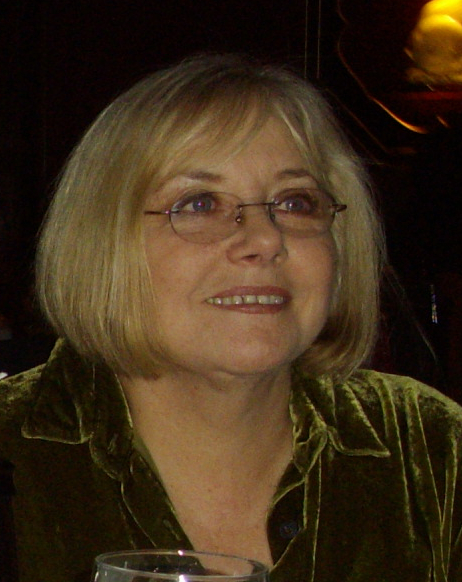
Cherry Hill Seminary has named Wendy Griffin of California State University, LWendy Griffinong Beach as its new academic dean.

They made a good choice.

I have worked with Wendy for several years on  the American Academy of Religion’s Contemporary Pagan Studies steering committee, which she co-chaired from 2005-10.

She and I also worked as co-editors of the Pagan Studies book series when it was at Rowman & Littlefield, before CSULB made her chair of women’s studies and she felt that she had too much on her plate.

She is not only a scholar and mentor, but she knows the “business” of academia—how to get things done. I would not have accepted the position of Pagan Studies co-chair this year had she not agreed to remain “of counsel,” as the lawyers say, and tell me and Jone Salomonsen how to work the system.

From the Cherry Hill news release:

“I am thrilled, simply thrilled, that Wendy is coming aboard as our new Academic Dean!  I cannot think of a better person to lead Cherry Hill Seminary towards accreditation,” said Aline O’Brien, chair of the board of directors.  “At precisely the right time in the Seminary’s growth, Wendy brings her unique combination of academic rigor and priestesshood to serve our maturing Pagan movement.”

Wendy Griffin, Ph.D., is an academic by profession, and a sociologist by training, with a Ph.D. in the interdisciplinary social sciences. She is professor emerita and chair of the Department of Women’s, Gender & Sexuality Studies at California State University, Long Beach, where she has taught for 26 years.

Perhaps the first American academic to be openly Pagan, Wendy has published numerous academic articles on Pagan women’s groups and is the editor of Daughters of the Goddess: Studies of Healing, Identity and Empowerment, a 13-essay survey of contemporary Feminist Witchcraft and Goddess Spirituality by British and American writers.  She is a founding co-chair of the Contemporary Pagan Studies Group in the American Academy of Religion, and serves on the editorial board of Pomegranate: The International Journal of Pagan Studies.

Griffin said of her appointment, “I am excited about being part of Cherry Hill Seminary and making a contribution to the growing reputation and professionalization of the Seminary. When I entered the academic world as a brand new Ph.D. 26 years ago, I had no idea I would be able to end my career helping to build an institution that would serve such a diverse and committed international community.”

As academic dean, Griffin will guide and direct the academic life of Cherry Hill Seminary, including work towards eventual accreditation of the institution.  “Wendy’s lifelong career experience will be invaluable as Cherry Hill Seminary continues to build and strengthen our program,” said Holli Emore, executive director.