Hard Times? Not for Hoodoo

People enter hoodoo through the door of suffering, to borrow a phrase from the Umbandistas.

The Wall Street Journal reports an uptick in the magic sector: “Need a Job? Losing your House? Who Says Hoodoo Can’t Help?”

In the early 20th century, white pharmacists in black neighborhoods began marketing hoodoo items through mail order after noticing they were fielding a lot of questions from their black customers about roots, herbs and potions. Their shops fell on hard times in the 1970s, in part because many African-Americans began to view hoodoo, also known as rootwork or conjure, as backward, say scholars who study the practice. “As African-Americans came more in the mainstream and more affluent, they were embarrassed by this stuff,” says Carolyn Morrow Long, author of  Spiritual Merchants,  a book about hoodoo stores.

Today’s hoodoo revival is again being driven primarily by white retailers, and that has some blacks criticizing the commercialization of ancient rituals for a quick profit. “Hoodoo is not just oh-help-me-bring-my-baby-back, help-me-get-my-man-back stuff,” says Katrina Hazzard-Donald, a Rutgers University sociology professor who is black and was taught hoodoo as a child. She says hoodoo stores are corrupting the spiritual belief system by selling inferior, nonsacred products and focusing on alleged quick fixes to problems. “What is so pathetic about it is they don’t even know the origins of all this stuff,” Ms. Hazzard-Donald says of online hoodoo vendors.

Among the businesses featured is the Forestville, Calif.-based Lucky Mojo Curio Co., which also figured in a recent journalistic book on magic in America. “I listened to your grandmother when you didn’t,” owner Catherine Yronwode tells her black customers—and, I suspect, Prof. Hazzard-Donald.

Don’t Mess with the Monk

Heather Abraham at Religion Nerd (in the sidebar) lists the most outrageous religion videos of 2010.

Included is the Christine O’Donnell “I’m not a witch” clip that prompted so many Wiccan responses and parodies. “Dabble-gate,” as Jason Pitzl-Waters calls it, also made it to number three on his top ten Pagan news stories of 2010 list.

But I agree with Abraham that the best video was a well-researched rap video based on Martin Luther’s 95 Theses, complete with reference to Philip of Hesse. Which is really fun if you are, in fact, a religion nerd.

Happy Crowleymass (in advance)

OTO Greeting CardIt is too late for Crowleymass this year, but if you want to be ready for next October 12th, order your cards through the Ordo Templi Orientis, New Zealand franchise.

Via Plutonica.

Wendy Griffin Named Cherry Hill Dean

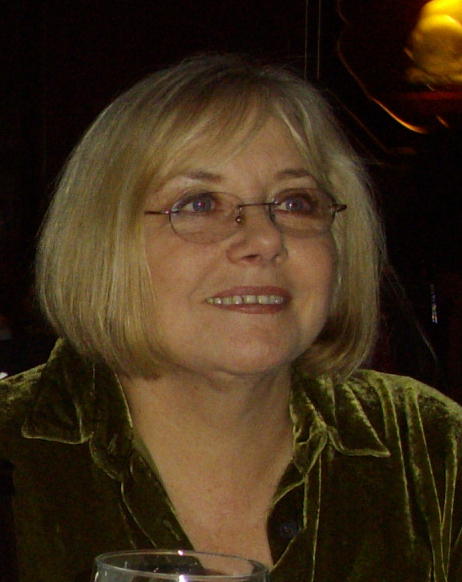
Cherry Hill Seminary has named Wendy Griffin of California State University, LWendy Griffinong Beach as its new academic dean.

They made a good choice.

I have worked with Wendy for several years on  the American Academy of Religion’s Contemporary Pagan Studies steering committee, which she co-chaired from 2005-10.

She and I also worked as co-editors of the Pagan Studies book series when it was at Rowman & Littlefield, before CSULB made her chair of women’s studies and she felt that she had too much on her plate.

She is not only a scholar and mentor, but she knows the “business” of academia—how to get things done. I would not have accepted the position of Pagan Studies co-chair this year had she not agreed to remain “of counsel,” as the lawyers say, and tell me and Jone Salomonsen how to work the system.

From the Cherry Hill news release:

“I am thrilled, simply thrilled, that Wendy is coming aboard as our new Academic Dean!  I cannot think of a better person to lead Cherry Hill Seminary towards accreditation,” said Aline O’Brien, chair of the board of directors.  “At precisely the right time in the Seminary’s growth, Wendy brings her unique combination of academic rigor and priestesshood to serve our maturing Pagan movement.”

Wendy Griffin, Ph.D., is an academic by profession, and a sociologist by training, with a Ph.D. in the interdisciplinary social sciences. She is professor emerita and chair of the Department of Women’s, Gender & Sexuality Studies at California State University, Long Beach, where she has taught for 26 years.

Perhaps the first American academic to be openly Pagan, Wendy has published numerous academic articles on Pagan women’s groups and is the editor of Daughters of the Goddess: Studies of Healing, Identity and Empowerment, a 13-essay survey of contemporary Feminist Witchcraft and Goddess Spirituality by British and American writers.  She is a founding co-chair of the Contemporary Pagan Studies Group in the American Academy of Religion, and serves on the editorial board of Pomegranate: The International Journal of Pagan Studies.

Griffin said of her appointment, “I am excited about being part of Cherry Hill Seminary and making a contribution to the growing reputation and professionalization of the Seminary. When I entered the academic world as a brand new Ph.D. 26 years ago, I had no idea I would be able to end my career helping to build an institution that would serve such a diverse and committed international community.”

As academic dean, Griffin will guide and direct the academic life of Cherry Hill Seminary, including work towards eventual accreditation of the institution.  “Wendy’s lifelong career experience will be invaluable as Cherry Hill Seminary continues to build and strengthen our program,” said Holli Emore, executive director.

Los Matachines at Yule

Taken several years ago with tribal permission, this Taos News photo shows the dancers led by former pueblo governor Ruben Romero.

You hear different languages. There are French tourists, German tourists, and some guy in a Rasta tam. Another man looks like he came straight from the nearby Overland Sheepskin Co. store, pausing only to snip the tags off his coat.

I am not the only one in the artsy Anglo uniform of broad-brimmed hat, colorful muffler or scarf, and sunglasses. M. wears her leather jacket and dangling Hopi earrings—another Southwestern look.  Scattered piles of ash from the bonfires of Christmas Eve, when they process the Virgin with fireworks and rifle shots.

The air smells of piñon pine smoke mixed with coal smoke. The Indian crafts shops on the ground floor of the old Taos Pueblo are doing a modest business. (Tribal members are required to spend part of each year in the old 13th-century buildings, sans indoor plumbing.)

Old Tony Reyna, a former Taos Pueblo governor, crosses the open ground, a red blanket around his shoulders, leaning on an ornate staff, and his elbow held by a younger man. He is a Bataan Death March survivor—so many of them were New Mexicans. (Jeez, he survived that.) But his appearance is not the signal.

Eventually, you see the phalanx of dancers pass by way up at the east end of the plaza. They pass behind the North House and . . . nothing happens.

Half an hour or so goes by. Then they appear between some houses and the church, and somehow people know to follow them to a little side area. There is a string band, El Abuelo and La Abuela, the little girl (La Malinche in some versions),  El Monarca (the king, sometimes Moctezuma.)

No Cortés. El Toro (the bull) is a bison. This is Taos, after all.

The masked dancers wear veils—a curtain of black cords—and thin scarves wrapped to hide their lower faces, tied behind their heads. They carry small canister rattles wrapped in flowing scarves in one hand and a sort of small, decorated wooden trident in the other. Multicolor shawls cover their shoulders and streamers flow down their backs.

The dancers take direction from El Abuelo, the Grandfather. He wears an old man’s mask with a long beard and is dressed like an old-fashioned Hispano rancher: blue jeans, shirt and leather vest, straw hat, and bullwhip, which he snaps for punctuation. He shouts in Spanish  His partner is La Abuela, Grandmother, definitely a man, in a head scarf and  long skirt, carrying a capacious handbag, who takes special care of the little girl in the princess costume who might be La Malinche. Or maybe not.

El Toro and La Abuela bring out a pole, like a Maypole but with woven sashes tied end to end descending instead of ribbons. The musicians play, the Bull and and the Grandfather hold up the pole—I  could go all structuralist here: Bull, Axis Mundi.

Everything means many things, I am sure, and the important thing is just to be there in your body, not to worry about “what it means.”

At the end, El Abuelo shouts, “Le gustan?”  (“You like it?”).  Everyone applauds, and the dancers go into a house. The crowd disperses, but some people in the know are walking towards the adobe church of San Geronimo.

Half a dozen old ladies, some in blankets, are lined up on the postage-stamp size stone-paved courtyard, surrounded by a low adobe wall. It is a good principle that where the old ladies are is where something will happen—and it will happen when they all get there.

Gradually people assemble around the outside of the wall. Half a dozen straight-backed chairs are brought out of the adobe church. Two at the church end of the court yard, two opposite, just inside the gate. A couple off to one side.

Waiting. My feet hurt. What about the feet of the old women standing on sandstone slabs?  Our Taos friends leave to go tend to their dogs. We will see them later.

And then the dancers arrive again, processing through the courtyard gate. The fiddler and guitarist sit in the two chairs at the church end and resume their tune, while the dancers form two files and dance various twirling figures, cowboy boots clomping on the slabs, while El Abuelo snaps his bullwhip and shouts, “Vámanos” (“Let’s go!”), etc.

La Abuela guides the little girl, and at one point the she and the king sit in chairs at the gateway end. A middle aged blanket-wrapped Indian man occasionally calls instructions in a loud whisper: “She’s got to be behind him!”  and so on. He must be the real master of ceremonies.

Low, weak sun. It is chilly in the shade. Lucky people with pueblo connections stand on flat roofs looking down into the courtyard.  Occasionally a woman will step up to the line of dancers to straighten the streams on (her son’s?) headdress.

We are spiraling past the solstice, and the dancers keep turning and turning. Most headdresses are decorated with squash blossom necklaces and other  tribal jewelry, but one displays two Bronze Stars and a Purple Heart, and when he turns I see that the ribbons down his back are green-gold-red like the Vietnam War service ribbon. Since the dancers appear to be young men, they must have been earned by his relatives?

The sun has well-passed its low zenith, and the dancers keep flowing as in a Virginia reel. At one point El Toro dances down between the two lines and makes a “pass” with each dancer individually. Then Abuelo and Abuela wrestle him comically to the ground and wave his (detachable) balls, which are offered to a woman standing in the church doorway, who smiles and hands them back. La Abuela puts them in her handbag.

Suddenly it’s over with a final series of weaving movements. M. has grown chilly standing in the shade of the church. We will drive back to our rented lodgings in town, pick up food and gifts, and drive a short way north of El Prado to our friends’ house for Christmas dinner. All is right.

An American Goddess

After a mere 150 years (the Vatican’s wheels turn slowly), the Roman Catholic church has decided that Mary really did appear in a Wisconsin chapel, now a popular pilgrimage site.

In one striking sign of a divine presence … the shrine’s grounds and the terrified crowd who gathered there were spared the flames of the Great Peshtigo Fire of 1871, which devoured the surrounding lands and homes and caused more than 1,200 deaths.

If I survived the Peshtigo Fire, I would be a believer too.

The economic effects of an authenticated Marian “apparition” are not to be sneezed at either.

Can You Prove that Witches Exist in Canada?

Somehow I missed this, but last September an organization of self-proclaimed Canadian skeptics challenged the world to prove that witches exist—along with Bigfoot, voodoo, and the Easter Bunny.

OK, all this fun hinges on the difference between “anthropological witchcraft” and capital-P Pagan religious capital-W Witchcraft.

But still.

Of course, if anyone shows up and says, “I’m a witch,” the professional skeptics will set the bar so high: “Can you fly? Can you turn me into a frog?” You know the drill. And no, metaphor will not be good enough.

DADT Repeals Raises Issues for Wiccan Chaplains–Assuming that We Had Wiccan Chaplains, That Is

Terry Mattingly at Get Religion, a blog about religion and journalism, looks at some of the fallout from the “don’t ask, don’t tell’ repeal for military chaplains.

His main question is whether a new military policy on homosexuals serving openly (they have always been there clandestinely) will affect the ability of some chaplains to follow the dictates of their tradition.

It’s a clash-of-rights issue, as he presents it.

But I what notice is how, once again, Wicca becomes the “default Other” religion, the hard case that must be accommodated:

How many Wiccans feel comfortable with a Pentecostal pastor, a Muslim imam, a Catholic priest, an Orthodox rabbi, an evangelical Lutheran or anyone from another faith leading their rites (if they are allowed to do so under their own vows)? Now, many forms of pagan faith do not have formal ordination procedures (while some do). Who approves the appointment of a layperson as a chaplain? How do a small circle of pagan chaplains serve believers on bases spread out around the world?

…. Now, the dying soldier is a Muslim and the chaplain is Jewish, Catholic, Eastern Orthodox, Pentecostal, Wiccan, etc. etc.

So far, there are no Pagan chaplains of any sort in the United States military. Well-qualified applicants get nowhere.

At the same time, at least some chaplains have been very supportive of military Pagans. The chaplaincy structure stood behind the Fort Hood Pagan group in 2000 all the way to the top.

Mattingly sees three possible outcomes. None of them is completely satisfactory:

(1) Find some way to end the chaplaincy program (under the assumption that if equal access is not possible, then closing down the chaplaincy program is the only legal option that is fair to all).

(2) Allow clergy to serve without violating their ordination vows (with the knowledge that, even when working with people of good will, this imperfect system will cause tensions and accusations of “hate speech”).

(3) The establishment of state-mandated and government-funded religious rites and rules of conduct of chaplains, mandating that expressions of the beliefs of many clergy are acceptable and that expressions of opposing beliefs are not acceptable. Some chaplains would argue that option (3) is already in place, but it is inconsistently enforced.

‘A Ritual of Transformation’

Preparing for last night’s solstice-eclipse, the Montreal Gazette went looking for the Pagan perspective.

There are two of them actually: The UPG, it’s-personal version …

“It’s a ritual of transformation from darkness into light,” says Nicole Cooper, a high priestess at Toronto’s Wiccan Church of Canada. “It’s the idea that when things seem really bleak, (it) is often our biggest opportunity for personal transformation.

“The idea that the sun and the moon are almost at their darkest at this point in time really only further goes to hammer that home.”

Cooper said Wiccans also see great significance in the unique coupling of the masculine energy of the sun and the feminine energy of the moon — transformative energies that she plans to incorporate into the church’s winter-solstice rituals.

Since the last time an eclipse and the winter solstice happened simultaneously was just under five centuries years ago, Cooper said she wasn’t familiar with any superstitions or mythologies associated with it.

… and the old-time communal Pagan version.

The winter solstice also played an important role in Greco-Roman rituals.

“It’s seen as a time of rebirth or renewal because, astrologically, it’s a time where the light comes back,” said Shane Hawkins, a professor of Greek and Roman studies at Carleton University in Ottawa.

For the ancient Romans, it was also a time of great feasting and debauchery.

“If (the eclipse) happened on the 21st, they might well have been drunk,” he said.

(Hat tip: Roberta X, who is most unimpressed.)

A reporter in Ohio left me an email about wanting to do a telephone interview, but she never called. Sigh. She must have found a more accessible expert.

The ‘War on Solstice’

At Huffington Post, Bron Taylor celebrates winning the “war on solstice.”

For conservatives involved in the West’s predominant religions, these are unwelcome developments. Progressives may ridicule those who claim that there is now a cultural “War on Christmas” but Christian conservatives do have reason to worry. They know that their cultural influence has been waning, and that those with evolutionary and ecological worldviews are growing in number and influence. A DVD series released by a group of conservative Christians entitled “Resisting the Green Dragon,” provides one recent example of such fears. These fears are based on an accurate perception that there is a religious dimension to much environmentalism. Those expressing such fears understand, accurately, that those engaged in nature-based spiritualities, both overtly and in subtle ways, are converting many to an evolutionary worldview and an environmentalist spirituality and ethics. They know that this is one reason they are having trouble even keeping their own children in the fold.

• Gus diZerega has a poem that “puts the Sol back in solstice,” but does not know who wrote it.

• Star Foster has “13 Songs  for Yule” with videos.